Introduction: Why Proper Culvert Protection Matters
Culverts are small but critical components of any drainage system. Whether installed under a driveway, roadway, or agricultural access point, they are responsible for controlling water flow and preventing flooding. However, without proper protection, fast-moving water can erode surrounding soil, weaken the structure, and eventually lead to failure.
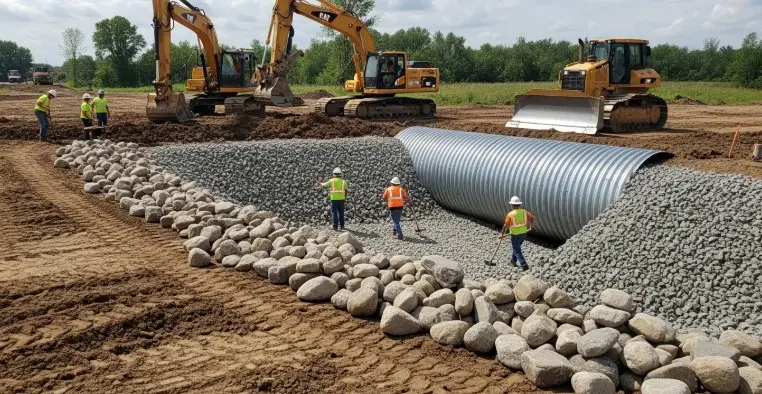
This is where understanding how to put rocks around culvert becomes essential. Proper rock installation, commonly called riprap protection, ensures long-term stability, controls erosion, and extends the life of the drainage system.
Professionals like Dirt Road Repairs often rely on engineered rock placement methods to protect culverts from washouts and structural damage.
Short Answer: How to Put Rocks Around Culvert?
Rock placement around a culvert involves installing graded stones (riprap) around the inlet and outlet of a pipe to prevent erosion and stabilize water flow.
Its main purpose is:
- Erosion control
- Structural protection
- Water flow stabilization
The process typically includes layering rocks in a controlled pattern over a prepared base and geotextile fabric.
It is commonly used in:
- Driveway culverts
- Roadside drainage systems
- Stormwater management structures
How to Put Rocks Around Culvert and Why It Is Important?
How to Put Rocks Around Culvert in Simple Terms
In simple terms, putting rocks around a culvert means placing large, durable stones around the pipe opening so water doesn’t wash away the surrounding soil.
For example, during heavy rain, water rushing through a driveway culvert can erode soil and create voids. Properly placed riprap prevents this by absorbing and slowing down water energy.
There is a major difference between:
- Loose dumping: Random rock placement with no engineering control
- Engineered riprap: Layered, interlocked stone placement designed for hydraulic stability
Only engineered placement ensures long-term performance.
Key Objectives of Installing Rocks Around a Culvert
Proper rock installation serves several engineering functions:
- Prevent soil erosion caused by high-velocity water
- Protect culvert inlet and outlet from structural washouts
- Control water velocity and dissipate energy
- Extend the service life of the culvert system
When Is Rock Protection Needed Around Culverts?
Rock protection is essential in conditions such as:
- High-flow drainage channels
- Driveway and road culverts
- Sloped terrain with strong runoff
- Stormwater and flood-prone areas
Without protection, even small culverts can fail under repeated water pressure.
Materials Used for Rock Installation Around Culverts
Selecting the right materials is critical for performance:
- Riprap stones: Large angular rocks for primary protection
- Crushed stone: Secondary stabilizing layer
- Gravel bedding: Base leveling and drainage support
- Geotextile fabric: Prevents soil mixing and erosion
- Sand layer (optional): Used for fine leveling in some cases
Each layer plays a structural role in maintaining system stability.
Types of Rocks Used Around Culverts
Angular Riprap Stones
- Best for interlocking stability
- High resistance to flowing water
- Primary material for high-energy zones
Crushed Stone
- Uniform size for controlled placement
- Used as base or intermediate layer
- Helps distribute load evenly
Natural Fieldstone
- Used in low-flow or decorative applications
- Less structural interlocking compared to angular rock
- Suitable for mild drainage areas
How to Put Rocks Around Culvert
Step 1: Site Inspection and Flow Analysis
- Study water direction and velocity
- Identify erosion-prone zones
- Determine rock sizing requirements based on flow energy
Step 2: Excavation and Preparation
- Clear soil around inlet and outlet
- Shape slopes for proper drainage
- Remove unstable or loose material
Step 3: Installing Geotextile Fabric
- Lay fabric across soil base
- Prevents soil from mixing with rock layers
- Enhances long-term structural stability
Step 4: Base Layer Installation
- Place crushed stone or gravel evenly
- Create stable foundation for riprap
- Ensure uniform thickness
Step 5: Rock Placement Around Culvert
- Install large riprap stones first
- Interlock stones tightly for stability
- Extend outward from culvert opening
- Focus on high-flow impact zones
Step 6: Final Shaping and Compaction
- Adjust slope for smooth water flow
- Compact surrounding soil properly
- Ensure no voids or weak spots remain
Equipment and Tools Required for Rock Culvert Installation
- Excavators for digging and shaping terrain
- Skid steers for precise rock placement
- Dump trucks for transporting materials
- Hand tools for finishing adjustments
- Compacting equipment for soil stabilization
Safety Standards and Best Practices
- Ensure stable slope before rock installation
- Avoid installation during active high water flow
- Use proper protective equipment during handling
- Prevent undercutting around culvert edges
- Follow engineered drainage design plans
Rock Materials for Culvert Protection
| Material | Best Use | Durability | Water Resistance | Cost Level | Stability |
|---|---|---|---|---|---|
| Angular Riprap | High-flow drainage | Very High | Excellent | High | Very High |
| Crushed Stone | Base layering | High | Good | Medium | High |
| Natural Fieldstone | Low-flow areas | Medium | Moderate | Low | Medium |
| Gravel | Bedding layer | Medium | Good | Low | Medium |
Common Problems When Installing Rocks Around Culverts
Improper Rock Size Selection
Small rocks can be displaced during strong water flow.
Lack of Geotextile Fabric
Without fabric, soil can mix with rock and weaken the system.
Poor Slope Design
Incorrect slope leads to pooling, overflow, or erosion.
Insufficient Rock Depth
Thin layers cannot withstand long-term hydraulic pressure.
Cost Factors for Installing Rocks Around Culverts
Several factors influence total cost:
- Type and quality of rock material
- Transportation distance to site
- Excavation depth and terrain complexity
- Equipment and labor requirements
- Use of geotextile fabric and base materials
Proper planning helps optimize cost without reducing quality.
Sub-Questions People Also Ask About How to Put Rocks Around Culvert
What size rock is best for culvert protection?
Large angular riprap (typically 6–12 inches or more) is most effective.
Do you need fabric under rocks around a culvert?
Yes, geotextile fabric prevents soil erosion and mixing.
How deep should rock be around a culvert?
Depth depends on flow, but typically 12–24 inches minimum.
Can gravel be used instead of riprap?
Only for low-flow areas; not suitable for high-energy water flow.
How do you stop erosion around a culvert?
Use properly sized riprap, geotextile fabric, and correct slope design.
Should culvert rock be compacted?
Yes, surrounding soil should be compacted for stability.
How long does rock protection around culverts last?
With proper installation, it can last decades with minimal maintenance.
Is concrete better than rock for culvert protection?
Rock is more flexible and better for energy dissipation; concrete is rigid but less adaptable.
Best Practices for Installing Rocks Around Culverts
- Always analyze water flow before starting work
- Use angular riprap for maximum interlocking strength
- Install geotextile fabric beneath all rock layers
- Design proper slope for efficient water movement
- Place larger stones in high-impact flow zones
- Inspect after heavy rainfall for early maintenance
FAQs About How to Put Rocks Around Culvert
What is the purpose of putting rocks around a culvert?
To prevent erosion and protect the structure from water damage.
How do you properly install rocks around a culvert?
By layering geotextile fabric, base gravel, and interlocked riprap stones.
What type of rock is used for culvert protection?
Angular riprap is the most commonly used material.
How much rock do I need around a culvert?
It depends on culvert size, flow rate, and slope conditions.
Can I install rocks around a culvert myself?
Small residential projects may be DIY, but engineered systems are recommended.
What happens if you don’t protect a culvert with rocks?
Erosion, washouts, and eventual structural failure can occur.
How often should culvert rock be replaced?
Only when displaced or damaged, proper installations last many years.
Does rock improve water flow in culverts?
Yes, it reduces energy and prevents erosion, ensuring smoother flow.