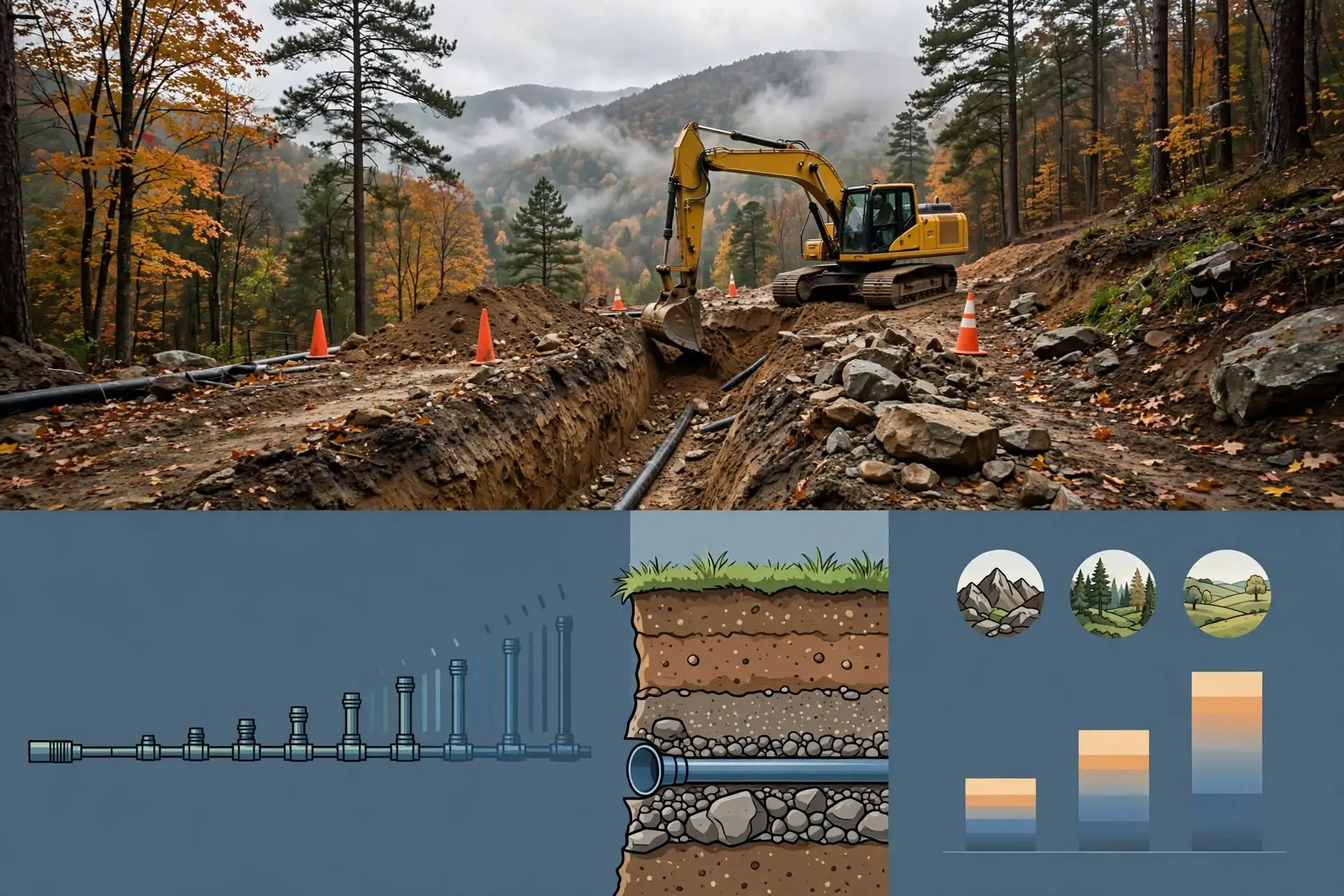
Running a new water line is one of those projects where the price can swing wildly from one property to the next, and the quotes you get can leave you scratching your head. One neighbor pays a couple thousand dollars and another pays five figures for what sounds like the same job. The gap comes down to three things, which are how long the line is, how deep it has to sit, and what the ground between the source and the house is made of. Once you see how each one moves the number, the quotes start to make sense.
Let me break down what water line installation runs in north Georgia for 2026, and how length, depth, and terrain each push the cost up or down.
How Water Line Cost Gets Figured
Water line work gets priced by the linear foot, since the main variable is how far the line has to run. For a trenched install, which is the common method on rural lots, the figure lands in a wide band. A basic run on open, easy ground can come in around twenty-five to eighty-five dollars per foot, while tougher jobs push well past that.
The reason for the range is that the per-foot price bundles several things together. It covers digging the trench, the pipe itself, laying and connecting the line, and backfilling the trench when the pipe is in. Change any one of those, and the per-foot number moves. The three biggest movers are length, depth, and terrain, so let me take them one at a time.
Length: How Far the Line Runs
Length is the first and most obvious driver, and on rural north Georgia property it is often the biggest one.
Short Runs Near the Road
A house sitting close to the water source or the road keeps the run short, and a short run keeps the total down. A hundred-foot line on decent ground might land somewhere around twenty-five hundred to eighty-five hundred dollars installed, depending on the pipe and the soil. That is the friendly end of the scale.
Long Rural Runs
Out in the county, houses often sit far back from the road, and that distance adds up fast. A run stretching several hundred feet or more multiplies every cost, since every foot needs trenching, pipe, and backfill. A line running close to a thousand feet can climb into the range of ten thousand to twenty-five thousand dollars. The farther your house sits from the source, the more the length alone drives the bill.
Depth: How Deep the Line Sits
Depth is the quiet cost driver that people tend to forget until the quote comes in.
Why Depth Matters
A deeper trench takes more time, more machine work, and more labor to dig and backfill. Water lines have to sit below the frost line and deep enough to stay protected, usually around eighteen to twenty-four inches in this region, since north Georgia has a shallow frost line compared to colder states. When the plan calls for a deeper line to clear other utilities or meet local code, the extra digging adds to the cost per foot.
The North Georgia Advantage
Here is a bit of good news for the region. Because the frost line here is shallow, water lines do not need the deep burial that northern states require, where lines can sit several feet down. That keeps the baseline depth, and the digging cost that comes with it, on the lower side compared to colder parts of the country. The catch is what you hit while digging, which brings us to terrain.
Terrain: What the Ground Is Made Of
Terrain is where north Georgia earns its reputation, and it is often the swing factor between a fair quote and a steep one.
Rock Is the Big One
The hills here hide a lot of rock, and rock is the enemy of a cheap trench. When the digging hits solid rock, the crew may need to break or work around it, and that slows the job and drives the cost up sharply. A line that could have been dug in a day turns into a multi-day fight with the ground. A property known for rocky soil should expect the terrain to push the number higher.
Clay, Slope, & Crossings
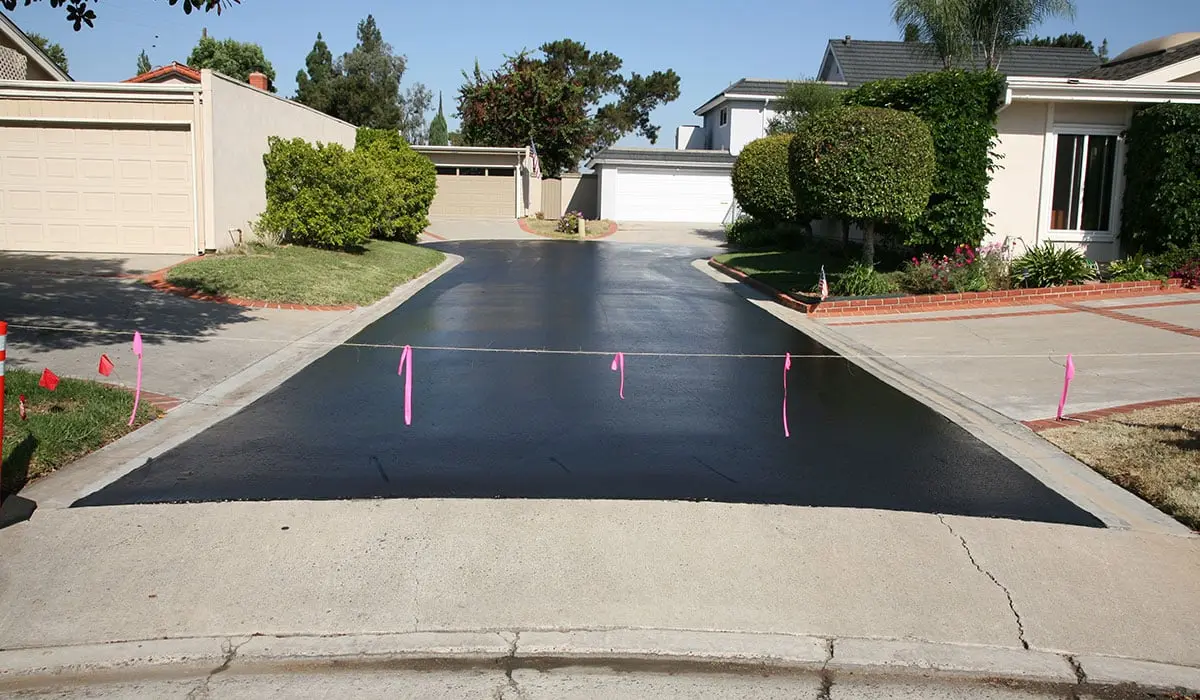
Red clay digs fine when the moisture is right but turns to a sticky mess when wet, which can stall a job. Steep grades make the machine work harder and slower. And anywhere the line has to cross a driveway, a road, or mature trees adds cost, since the crew has to work around or restore what they cut through. Each of these terrain factors adds to the per-foot price.
Pipe Material Also Plays a Part
Beyond the big three, the pipe you choose nudges the cost too. The common choices sit at different price points. PVC and PEX run cheap, often under a couple dollars per foot for the material, and PEX in particular holds up well because it flexes and resists freezing. Copper costs more, several dollars per foot, and gets chosen when longevity is the priority. On most rural runs, PEX or PVC keeps the material cost reasonable while doing the job well.
Putting a Real Number on Your Project
Water line installation cost in north Georgia comes down to length, depth, and terrain, with pipe material rounding it out. A short run on open ground near the road stays affordable, often in the low thousands. A long run crossing rocky, sloped, or clay-heavy ground with a driveway in the way can climb past ten thousand dollars fast. The frost line here works in your favor by keeping burial depth shallow, but the rock in these hills can take that saving right back. The way to get a real number is to have someone walk the actual route, read the ground, and factor in the length, the depth the plan calls for, and what lies between the source and the house. Once those three are known, the wide range narrows to a figure you can plan around.