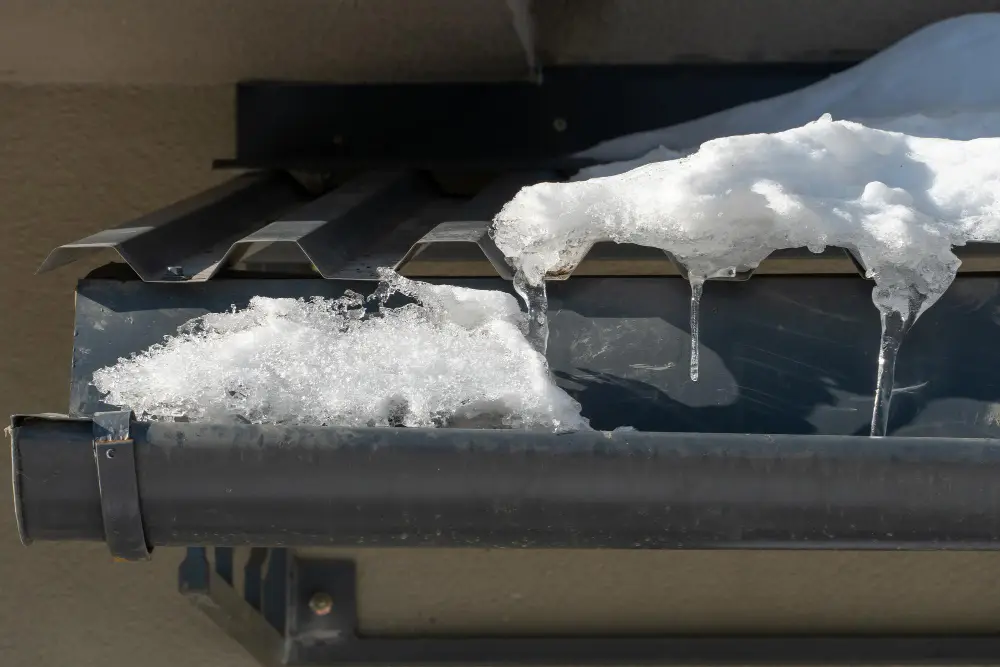
Ice dams form along roof edges during winter, blocking drainage and forcing water under shingles where it causes leaks and damage. Gutters suffer significantly from ice dam conditions, with ice accumulation pulling them away from the fascia, opening seams, and deforming channels. Preventing ice dams protects both your roof and your gutter system.
How Ice Dams Form
Ice dams develop when snow on the roof melts, runs down to the cold roof edge, and refreezes. The process requires specific temperature conditions and roof characteristics.
The Melt-Freeze Cycle
Heat escaping through the roof surface warms the snow above. The warmed snow melts and water runs downhill beneath the remaining snow pack. When the water reaches the roof edge, which extends beyond the heated interior, it encounters cold surfaces and refreezes.
Each cycle adds more ice to the dam. As the dam grows, it blocks drainage from the roof. Water pools behind the dam and eventually works its way under shingles and into the building.
Factors That Contribute to Ice Dams
Poor attic insulation allows heat to escape through the roof. The heat reaches the underside of the roof deck and warms the shingles from below. This accelerates snowmelt even when outdoor temperatures are below freezing.
Inadequate attic ventilation traps warm air against the roof deck. Proper ventilation moves cold air through the attic space and keeps the roof deck close to outdoor temperatures.
Certain roof configurations promote ice dam formation. Low-slope sections, areas above recessed lighting, and spots near chimneys or exhaust vents experience more heat transfer and greater ice dam risk.
Damage Ice Dams Cause to Gutters
Gutters at the roof edge sit directly in the ice dam zone and suffer damage from multiple causes.
Weight Damage
Ice is heavy. A one-inch layer of ice weighs about five pounds per square foot. A gutter filled with ice and supporting additional ice on the roof edge above can carry hundreds of pounds of load.
This weight exceeds what gutter hangers were designed to support. Hangers pull out of the fascia, bend, or break. The gutter sags, pulls away from the building, or collapses entirely.
Expansion Damage
Water expands when it freezes. Ice forming inside a gutter pushes outward against the sides of the channel. This force can split seams, pop rivets, and deform the gutter profile.
Downspouts are particularly vulnerable. Water trapped in a downspout expands as it freezes and can split the pipe vertically.
Overflow & Backup
Ice dams block the normal drainage path from roof to gutter to downspout. Water backs up behind the dam and overflows, often running behind the gutter and down the fascia. This leads to rot and paint failure on wood trim.
Water forced under shingles can enter the building and damage insulation, ceilings, and walls. The gutter may appear to be the source of the leak when the actual problem is ice dam backup on the roof.
Preventing Ice Dams
Addressing the root causes of ice dams is more effective than dealing with ice after it forms.
Improving Attic Insulation
Adding insulation to the attic floor reduces heat transfer to the roof deck. Modern energy codes call for R-38 to R-60 attic insulation depending on climate zone. Many older homes have significantly less.
Focus on areas where insulation is thin or missing. Locations around recessed lights, attic hatches, and plumbing penetrations often lack adequate insulation.
Air sealing is equally important. Gaps around wiring, pipes, and ductwork allow warm air to leak into the attic. Seal these penetrations with caulk, foam, or metal flashing.
Increasing Attic Ventilation
Proper attic ventilation moves cold outside air through the attic space. Intake vents at the soffits bring in air from below. Exhaust vents at the ridge or near the peak allow warm air to exit.
The ratio of ventilation to attic floor area should be approximately 1:150 or 1:300 depending on if the system is balanced between intake and exhaust. Consult building codes for your area.
Avoid blocking soffit vents with insulation. Baffles installed at the roof edge create channels that maintain airflow even when insulation fills the space.
Removing Snow from the Roof
Clearing snow from the roof edge eliminates the water source that feeds ice dams. A roof rake allows you to pull snow off the lower few feet of the roof while standing on the ground.
Use a roof rake designed for the purpose, with rollers or bumpers that prevent shingle damage. Pull snow straight down the roof rather than sideways to avoid tearing shingles.
Focus on the three to four feet of roof above the gutter line. This area is where ice dams form and where snow removal has the greatest impact.
Installing Heat Cables
Heat cables, also called heat tape, provide targeted warming along the roof edge and in gutters. The cables prevent ice formation in the areas they cover.
Install heat cables in a zigzag pattern along the roof edge, extending up the roof slope two to three feet. Run the cable down through the gutter and into the downspout. A thermostat turns the system on when temperatures drop to the ice-forming range.
Heat cables consume electricity and add to winter utility costs. They work best as a supplement to insulation and ventilation improvements rather than a primary solution.
Installing Ice & Water Shield
Ice and water shield is a membrane applied to the roof deck before shingles are installed. It provides a waterproof layer at the roof edge that prevents leaks even when water backs up behind ice dams.
This product makes sense during roof replacement rather than as a retrofit. Building codes in cold climates typically require ice and water shields on the first three feet of roof from the edge.
Protecting Gutters During Ice Dam Events
Even with preventive measures, ice dams may still form during severe winter conditions. Protecting gutters during these events minimizes damage.
Avoiding Harmful Ice Removal
Never chip, hammer, or pry ice from gutters. These actions cause more damage than the ice itself. Punctured and dented gutters require repair or replacement.
Allow ice to melt naturally when temperatures rise. The melting process may take several days during prolonged cold spells.
Using Calcium Chloride Ice Melt
Calcium chloride melts ice at lower temperatures than rock salt and is less harmful to metal and vegetation. Fill old stockings or cloth tubes with calcium chloride and place them across ice dams.
The product melts channels through the ice, allowing trapped water to drain. This reduces pressure on the gutter and prevents continued backup.
Do not use rock salt on roofs or gutters. The sodium chloride damages metal and kills plants where runoff lands.
Planning Post-Winter Repairs
Document any ice dam damage for repair when weather permits. Photograph damaged areas and note locations that need attention.
Schedule gutter inspection and repair for early spring. Address hanger damage, seal opened seams, and replace sections that were crushed or deformed.
Dirt Road Repairs helps homeowners prevent ice dam damage and repair gutters affected by winter conditions. We assess your situation and recommend solutions that protect your investment. Contact us to prepare your gutter system for winter or to repair damage from past ice dam events.