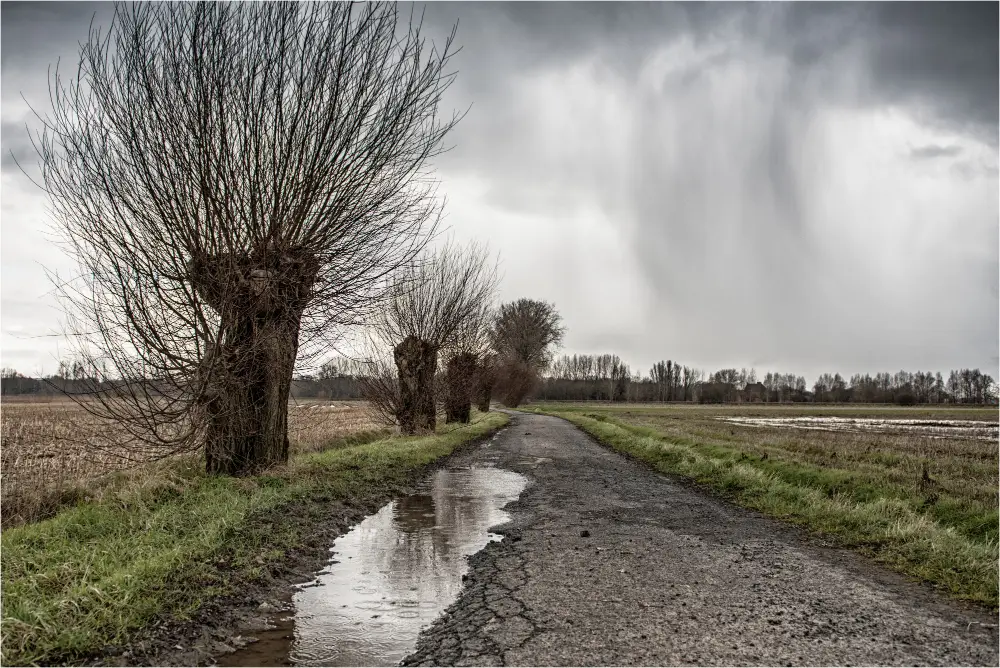
North Georgia gets a lot of rain. Anyone who has lived here for more than one season already knows that. The mountains and foothills don’t just look wet, they stay wet for stretches at a time. And when that rain comes down hard and fast, dirt and gravel roads take the brunt of it.
This isn’t just a nuisance. The damage that builds up from repeated rainfall events can turn a functional road into something that’s barely passable. Knowing what actually happens to dirt roads during and after heavy rain goes a long way toward knowing what to do about it.
What Happens to the Road Surface
When rain hits a dirt road, the first thing that changes is the surface. Dry, compacted material becomes saturated. Once the ground can’t absorb any more water, that water starts moving across the surface, and it takes road material with it.
Surface Erosion
Surface erosion is one of the most visible forms of rainfall damage on dirt and gravel roads. Water running across the road surface carries away fine particles, loosening the top layer and leaving behind a rough, uneven surface. After a few storms, the road starts to look washed out and feels that way to drive on too. The problem isn’t cosmetic, once the surface material is gone, the base beneath it is exposed and the damage picks up speed.
Rut Formation
Ruts form when vehicles drive on a road that’s already soft from rain. The tires sink into the saturated material and push it to the sides. Once ruts are there, they collect water the next time it rains, which makes them deeper. Left alone, ruts can grow to the point where they become a hazard for regular passenger vehicles, and they almost always lead to a bigger repair down the line.
The Role of Drainage in Road Survival
Most people don’t think about drainage until there’s a problem. But drainage is what determines how well a dirt road holds up when heavy rain moves through. Roads that shed water quickly don’t absorb as much. Roads that hold water or channel it the wrong way deteriorate fast.
Crown & Grade
A properly graded dirt road has a crown, a slight rise in the center, so that water runs off to the sides rather than pooling in the middle. Over time, that crown flattens out from traffic and weather. Once it’s gone, water starts sitting on the road surface instead of moving off it, and the damage accelerates from there.
Ditch & Culvert Function
Ditches along the sides of a road are there to catch runoff and move it away from the road base. Culverts carry water under the road where it needs to cross a low point or a natural channel. When ditches fill with sediment or culverts get blocked, water backs up and finds its own path, usually straight across or under the road. That leads to washouts and erosion of the base material that holds everything together.
North Georgia Terrain Makes This Harder
North Georgia has steep grades, clay-heavy soils, and significant annual rainfall totals. Each of those factors adds stress to dirt and gravel roads that roads in flatter, drier regions don’t deal with in the same way.
Clay soil expands when it gets wet and contracts when it dries. That constant movement works against road stability over time. When clay-heavy subgrade gets saturated, it loses its load-bearing ability almost entirely. Vehicles that would normally travel the road without causing damage start creating ruts just by driving over it.
The slopes common throughout this region also mean that water picks up speed as it moves. Moving water carries more material and cuts deeper channels than slow-moving water. Roads built across hillsides or at the base of slopes are at serious risk after storms, especially when drainage hasn’t been set up to handle the volume.
Gravel Roads vs. Dirt Roads in Wet Weather
Gravel roads handle rainfall better than bare dirt roads, but they’re not immune to the same problems. The gravel layer helps with drainage and gives tires better traction in wet conditions. But if the base beneath the gravel is compromised, the gravel sinks into it over time and the road loses its stability regardless of what’s on top.
The type of gravel matters too. Crush and run includes fines that bind together and tends to hold up better under traffic than round gravel that shifts. 57 stone drains well but needs a solid base beneath it or it won’t stay in place after a few heavy rain events.
What Repairs Look Like After Rainfall Damage
Getting a dirt or gravel road back in working condition after rainfall damage isn’t just about filling in the ruts. Filling ruts without addressing what caused them means they’ll be back after the next storm.
Real repair work involves re-establishing the crown so water sheds properly, clearing ditches and culverts so water has somewhere to go, and recompacting the road surface so it can hold up under traffic again. In some cases, additional material is needed to rebuild sections where erosion has removed too much of the base.
The condition of the subgrade matters as much as the surface. If the material beneath the road is compromised, the road will keep failing until that’s addressed. Diagnosing what’s going on below the surface is what separates a repair that holds from one that doesn’t.
Staying Ahead of the Damage
Dirt and gravel roads in North Georgia need attention after significant rainfall events. Waiting too long turns minor surface damage into something that takes more time and material to fix. Catching ruts early, keeping ditches clear, and maintaining the crown on the road means it holds up better over the long term and stays passable through wet seasons without constant intervention.
Rain isn’t going anywhere in this region. The roads that hold up are the ones that are built and maintained with that in mind from the start.