Proper gutter drainage is one of the most overlooked yet critical parts of protecting a home. If water isn’t carried far enough away—or buried at the wrong depth, it can lead to foundation damage, erosion, frozen pipes, and constant yard problems. This guide answers how deep to bury gutter drainage pipe in the most complete, practical, and Google-preferred way, based on real-world installation standards and expert best practices.
Short Answer — How Deep to Bury Gutter Drainage Pipe
Most gutter drainage pipes should be buried 8–12 inches deep, with 6 inches as an absolute minimum and 12–18 inches recommended in colder climates or high-traffic areas.
Minimum depth: 6 inches
Ideal depth: 8–12 inches
Cold climates / driveways: 12–18 inches
One-sentence takeaway: Bury gutter drainage pipe deep enough to protect it from freezing, crushing, and surface damage, while maintaining proper slope for smooth water flow.
Understanding Gutter Drainage Pipes and Why Burial Depth Matters
Gutter drainage pipes carry rainwater from downspouts away from your foundation to a safe discharge point such as a pop-up emitter, dry well, or storm drain. The depth at which these pipes are buried directly impacts performance and longevity.
Why burial depth is critical:
Water flow efficiency: Proper depth allows consistent slope, preventing standing water.
Freeze protection: Shallow pipes freeze and crack in cold climates.
Pipe lifespan: Deeper burial reduces UV exposure and physical damage.
Yard safety & aesthetics: Prevents trip hazards, exposed pipes, and lawn damage.
Problems caused by incorrect depth:
Constant clogs and backups
Frozen or burst pipes
Crushed corrugated pipe
Erosion near the foundation
How Deep to Bury Gutter Drainage Pipe Based on Common Standards
Industry best practices, not complicated building codes, provide clear guidance for residential installations.
How Deep to Bury Gutter Drainage Pipe for Residential Homes
For most homes:
8–12 inches deep is the standard recommendation
Allows room for a gravel base and consistent slope
Deep enough to avoid lawn equipment damage
Slope requirement:
Maintain ¼ inch of drop per foot of pipe run for gravity drainage.
Depth Requirements by Pipe Diameter
3-inch pipe: Minimum 6–8 inches (short runs only)
4-inch pipe: Ideal at 8–12 inches (most common choice)
Corrugated vs solid pipe:
Corrugated pipe needs more depth and bedding to prevent collapse
Solid PVC can tolerate slightly shallower burial but still performs best at 8–12 inches
Depth Requirements Based on Climate
Cold climates: 12–18 inches to stay below shallow frost
Mild climates: 8–12 inches
Hot/dry regions: 6–8 inches may be acceptable if slope is maintained
Key Factors That Determine How Deep You Should Bury a Gutter Drainage Pipe
Several site-specific factors influence the ideal depth:
Soil type: Clay requires deeper burial and gravel bedding
Yard slope: Flat yards need more depth to maintain pitch
Pipe material: Corrugated needs more protection than PVC
Traffic load: Deeper burial under driveways or walkways
Frost depth: Pipes should be below shallow freeze zones
Discharge type: Dry wells and storm drains often require deeper connections
How to Bury a Gutter Drainage Pipe Correctly
Step 1 — Plan the Drainage Path and Outlet
Measure total run length
Choose a downhill discharge point at least 10 feet from foundation
Step 2 — Determine the Correct Depth
Start at 8–12 inches deep
Add depth as needed to maintain ¼ inch slope per foot
Adjust deeper in freeze-prone areas
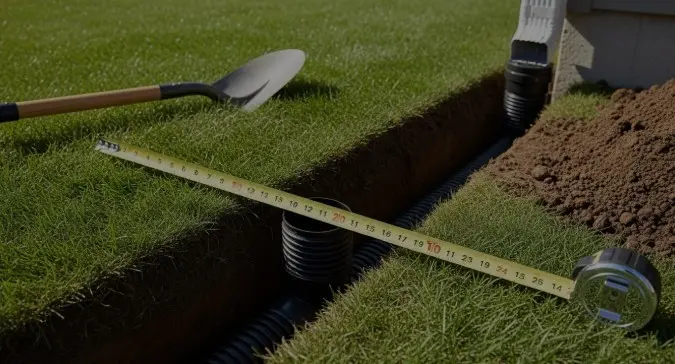
Step 3 — Dig the Trench
Trench width: pipe diameter + 4–6 inches
Maintain consistent depth and smooth bottom
Step 4 — Add Base Material
2–3 inches of gravel or coarse sand
Prevents settling and improves drainage
Step 5 — Lay and Connect the Pipe
Holes down for corrugated pipe
Secure joints tightly to prevent leaks
Step 6 — Test Water Flow Before Backfilling
Run water through the system
Check for standing water or leaks
Step 7 — Backfill and Compact Properly
Backfill in layers
Light compaction to avoid pipe collapse
Recommended Burial Depths by Drainage Setup
Downspout to Pop-Up Emitter
8–12 inches
Ensure emitter sits flush with lawn surface
Downspout to Dry Well
12–18 inches
Allows proper infiltration and storage
Downspout to Storm Drain
Match storm drain inlet depth
Typically 12+ inches
Gutter Drainage Under Driveways or Walkways
12–18 inches minimum
Use solid PVC only
Gutter Drainage Pipe Depth Recommendations
| Pipe Type | Pipe Diameter | Climate Type | Minimum Depth | Ideal Depth | Use Case |
|---|---|---|---|---|---|
| Corrugated | 3-inch | Mild | 6 in | 8 in | Short residential runs |
| Corrugated | 4-inch | Cold | 8 in | 12–18 in | Standard home drainage |
| PVC Solid | 4-inch | Any | 8 in | 10–12 in | Long-term durability |
| PVC Solid | 4-inch | Cold | 10 in | 12–18 in | Driveways, freeze zones |
Common Mistakes When Burying Gutter Drainage Pipe
Burying too shallow and exposing pipe to damage
Ignoring slope requirements
Skipping gravel bedding
Crushing corrugated pipe during backfill
Discharging water too close to the foundation
Signs Your Gutter Drainage Pipe Is Buried Too Shallow or Too Deep
Standing water near downspouts
Frozen or clogged pipes in winter
Lawn depressions or sinkholes
Poor pop-up emitter performance
FAQs About How Deep to Bury Gutter Drainage Pipe
How deep should a gutter drainage pipe be buried minimum?
At least 6 inches, though 8–12 inches is strongly recommended.
Can you bury gutter drainage pipe too deep?
Yes, excessive depth can make maintenance difficult and disrupt slope.
How deep to bury gutter drainage pipe to prevent freezing?
Typically 12–18 inches in cold climates.
Does gutter drainage pipe need gravel underneath?
Yes, 2–3 inches of gravel improves flow and prevents settling.
How deep to bury gutter drainage pipe under a driveway?
At least 12 inches, preferably with solid PVC.
Is 4 inches deep enough for a gutter drainage pipe?
No, this is too shallow and risks damage and freezing.
Does pipe material affect burial depth?
Yes. Corrugated pipe needs deeper burial than PVC.
How far down should downspout drainage pipes go?
Deep enough to maintain slope, usually starting at 8–12 inches.
Expert Tips for Long-Lasting Gutter Drainage Systems
Use 4-inch pipe whenever possible
Avoid sharp turns that trap debris
Inspect outlets twice per year
Upgrade corrugated pipe to PVC for heavy-use areas
Keep discharge points clear of soil and mulch
Conclusion — How Deep to Bury Gutter Drainage Pipe the Right Way
To get gutter drainage right, depth matters as much as slope and materials. For most homes, burying gutter drainage pipe 8–12 inches deep provides the best balance of protection, performance, and durability. Go deeper in cold climates, under driveways, or when connecting to dry wells or storm drains. For proper installation visit Dirt Road Repairs now!
DIY installation works well for short runs, but complex grading or freeze-prone systems may benefit from professional installation. When installed at the correct depth, a gutter drainage system can protect your home for decades with minimal maintenance.