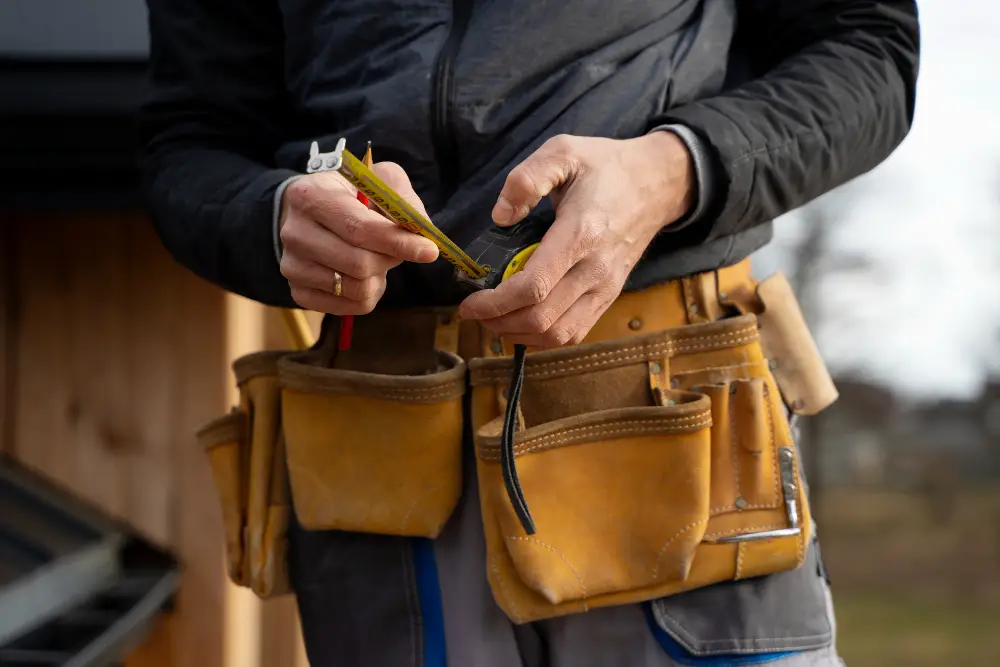
Having the right tools before starting a gutter installation project saves time, prevents frustration, and produces better results. Gathering everything you need beforehand means fewer trips to the hardware store and a smoother workflow from start to finish. This guide covers the tools required for a successful gutter installation, from safety equipment to finishing supplies.
Safety Equipment
Working at heights requires proper safety gear. Falls from ladders account for thousands of injuries each year, and many of these accidents happen during home improvement projects.
Ladders
An extension ladder is the primary tool for reaching the roofline. Choose a ladder rated for your weight plus the weight of tools and materials you will carry. Type I ladders support up to 250 pounds, Type IA supports 300 pounds, and Type IAA supports 375 pounds.
The ladder must extend at least three feet above the roofline for safe access. For a single-story home with eight-foot ceilings, a 20-foot extension ladder works for most situations. Two-story homes require a 28-foot or longer ladder.
Ladder Stabilizer
A ladder stabilizer attaches to the top of the ladder and creates a wider stance against the building. This accessory keeps the ladder away from the gutter area so you can work without the ladder interfering. It also provides more stability than resting the ladder directly against the fascia or gutter.
Safety Glasses
Metal shavings and debris fly when cutting gutters and drilling holes. Safety glasses protect your eyes from these hazards. Choose glasses that fit comfortably and stay in place while you look up and down.
Work Gloves
Cut metal edges are sharp enough to cause serious cuts. Work gloves protect your hands when handling gutter sections, especially after cutting. Leather or synthetic leather gloves provide good protection while allowing enough dexterity to handle small fasteners.
Measuring & Layout Tools
Accurate measurements and proper layout determine how well the finished gutter system performs.
Tape Measure
A 25-foot tape measure handles most residential gutter projects. Choose one with a wide blade that stays rigid when extended. A locking mechanism holds the tape at your measured length while you mark or cut.
Chalk Line
A chalk line creates a straight reference mark along the fascia board for positioning hangers. The line establishes the slope from the high point to the downspout location. Fill the chalk box with weather-resistant marking chalk that shows up against your fascia color.
Level
A two-foot or four-foot level helps verify that hangers follow the intended slope. While gutters should not be level, using a level with a measured offset confirms consistent slope along the run.
Pencil or Marker
Mark cut lines on gutters and hanger positions on the fascia. A carpenter’s pencil works well on wood fascia. A permanent marker shows up better on gutter material.
Cutting Tools
Gutters require cutting to length, and outlets require cutting holes for downspout connections.
Tin Snips
Tin snips cut aluminum and vinyl gutters. Aviation-style snips come in three types: left-cutting, right-cutting, and straight-cutting. A set of all three allows you to cut curves and angles in any direction. For most gutter work, straight-cutting snips handle the majority of cuts.
Hacksaw
A hacksaw with a fine-tooth blade cuts through gutter material when tin snips cannot make the cut. Use a hacksaw for cutting downspout sections and for starting cuts in tight areas.
Miter Saw with Metal-Cutting Blade
A power miter saw speeds up cutting significantly on larger projects. Use a blade designed for cutting non-ferrous metal. The saw makes straight, clean cuts and handles multiple sections quickly. Wear hearing protection when using power tools.
Hole Saw or Nibbler
Cutting holes for drop outlets requires either a hole saw attached to a drill or a nibbler tool. Hole saws cut round openings cleanly. Nibblers allow more control for positioning rectangular outlets.
Fastening Tools
Gutters attach to the fascia with screws and connect to each other with rivets or screws.
Drill & Bits
A cordless drill drives screws through hangers into the fascia and through gutter sections at joints. Include a set of drill bits for pilot holes and driver bits that match your fastener heads. A magnetic bit holder keeps screws on the driver while you position them.
Pop Rivet Gun
Pop rivets secure gutter sections at joints and attach end caps and corners. A hand-operated rivet gun works for most projects. Pneumatic rivet guns speed up the work on large installations.
Caulk Gun
Gutter sealant comes in tubes that require a caulk gun for application. Choose a gun with a smooth trigger action and a built-in cutter for opening sealant tubes.
Assembly & Fitting Tools
Several tools help with assembling components and fitting sections together.
Crimper
A crimper tool creates ridges at the end of downspout sections so they fit inside the next section. The crimped end slides into the uncrimped end of the adjoining piece, creating an overlapping joint that sheds water properly.
Gutter Sealant
Gutter sealant, also called gutter caulk, seals joints and connections to prevent leaks. Use sealant formulated specifically for gutters rather than general-purpose caulk. Gutter sealant remains flexible across temperature changes and adheres to metal surfaces.
File or Deburring Tool
Cut edges on metal gutters are sharp and can have burrs that interfere with fitting components together. A metal file or deburring tool smooths these edges.
Additional Supplies
Beyond tools, several supplies complete the installation.
Gutter screws, typically hex-head screws in one-inch and two-inch lengths, fasten hangers and join sections. Pop rivets in 1/8-inch diameter work for most gutter connections. Have extra supplies on hand since some fasteners get dropped or damaged.
A bucket or tool belt keeps fasteners and small tools within reach while on the ladder. Climbing up and down to retrieve dropped items wastes time and increases fall risk.
Dirt Road Repairs arrive at every job with professional-grade tools and the expertise to use them properly. If gathering tools and tackling the installation yourself seems like more than you want to take on, contact us for a quote on professional gutter installation.