A driveway that falls apart is almost never a stone problem. It is a water problem. When a gravel or dirt driveway starts growing potholes, rutting out, or holding puddles after every rain, the cause traces back to how the ground was sloped underneath it. Get the slope right and the surface sheds water and lasts for years. Get it wrong and you end up patching the same spots over and over. In the hills around Dahlonega, where the ground drops and the red clay holds water, slope matters even more than it does on flat land.
Let me walk through what driveway grading does, why slope is the whole game, and how the right grade heads off the three problems that wreck a driveway.
What Grading Actually Means
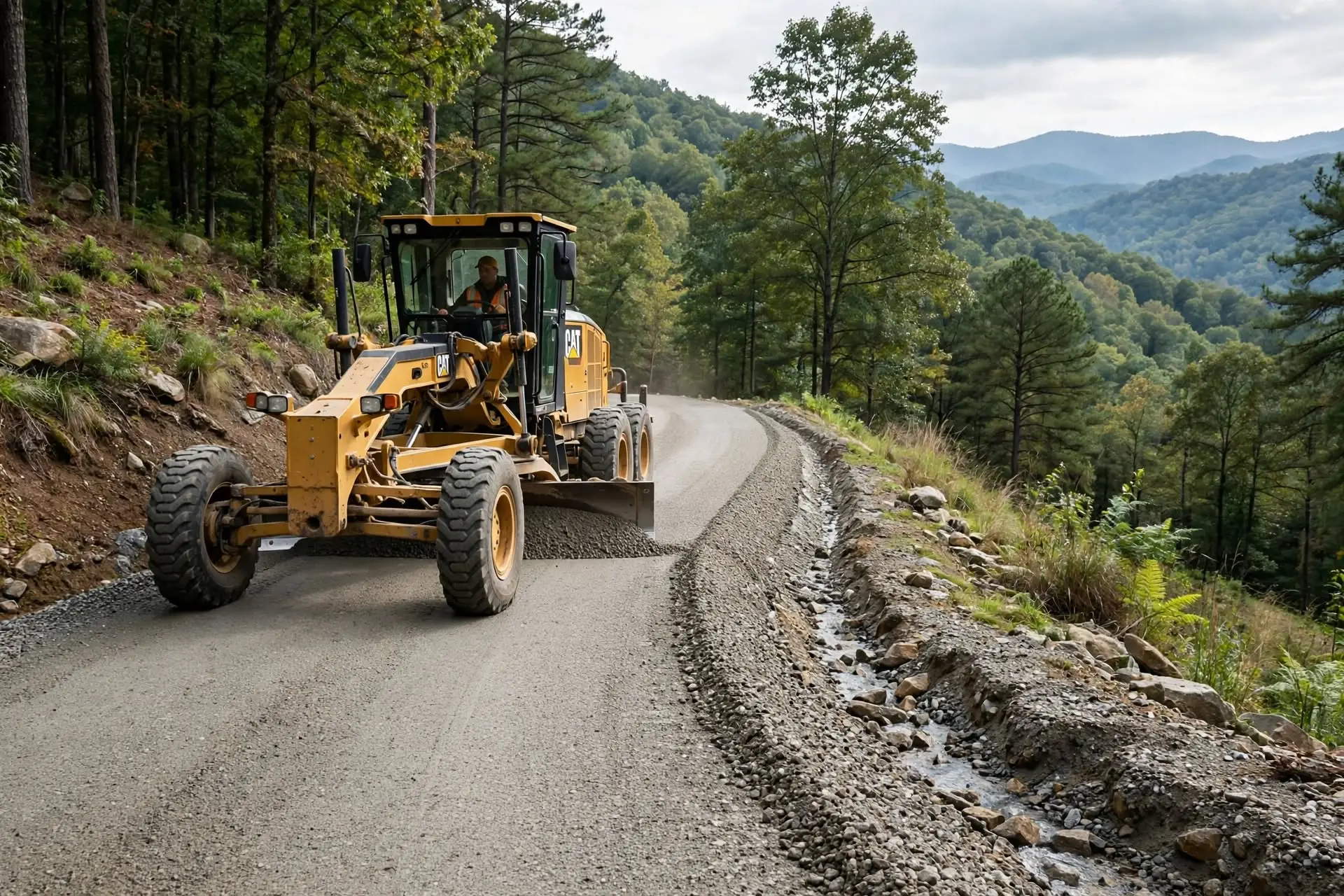
Grading is the work of shaping the ground so the driveway sits at the right levels and sends water where you want it to go. It is not just leveling the surface flat. A flat driveway is one of the worst things you can build, because flat ground gives water nowhere to run, so it sits and soaks in.
Good grading builds in two kinds of slope. The first is the slope along the length of the driveway, which follows the lay of the land from the road to the house. The second is the crown or cross-slope, which is the slight tilt across the width that sheds water off to the sides. Together these two slopes keep water moving off the surface instead of pooling on it or running straight down the middle.
Why Slope Is the Whole Game
Water is the thing that destroys driveways, and slope is what controls the water. Everything else, including the stone and the base, only works if the water has somewhere to go.
Water Has to Leave the Surface
When rain hits a driveway, it needs to run off fast. A proper crown pushes the water to the edges, where ditches or the surrounding ground carry it away. Once the water is off the surface, it cannot pool, soak in, or cut channels. The driveway stays firm and dry underneath, which is what keeps it in one piece.
Too Much Slope Causes Its Own Trouble
Slope has a sweet spot. Not enough, and water sits. Too much, and the water runs so fast down the length that it scours the surface and carries the gravel off with it. On the steep grades common around north Georgia, managing that speed is part of the job. The fix is often adding ways for water to break off the driveway along the way instead of letting it build speed all the way down.
How Slope Stops the Three Big Problems
The reason slope gets so much attention is that it heads off the three failures that show up on a poorly graded driveway. Here is how each one connects back to water.
Potholes
Potholes start where water sits. A low spot holds a puddle, the water softens the ground beneath it, traffic pushes the soft spot down, and a pothole is born. Once it forms, it catches more water and grows. Proper slope removes the low spots where water can collect, so the puddles never form and the potholes never start.
Erosion
Erosion happens when moving water carries soil and gravel away. On a driveway with too much slope and no way to shed water along the length, the runoff builds speed and cuts channels down the surface, washing the material downhill. Grading that controls the slope and gives water a path off to the sides keeps the flow gentle enough that it leaves the surface intact instead of carving it up.
Standing Water
Standing water is the plainest sign of bad grading. It shows up in low spots and on surfaces that are too flat to drain. Beyond being a nuisance, it soaks into the base and softens it, which leads straight to ruts and potholes. Grading that builds in a crown and removes the low spots gives water nowhere to stand, so it runs off and the surface stays dry.
Why the Clay Here Makes Grading Matter More
Red clay changes the math on all of this. Clay sheds water instead of soaking it in, so when rain falls, more of it runs across the surface than would on sandy ground. That means a clay driveway has to move more water, faster, which puts the slope under more pressure to do its job.
Clay also turns soft and slick when it stays wet, so any water that sits on a clay driveway does real damage to the base below. On top of that, the grades in this part of Georgia are often steep, which adds the runoff-speed problem to the mix. All of it points to the same thing, which is that grading on local clay and slopes needs more care and local know-how than the same job on friendlier, flatter ground.
Keeping a Driveway Sound for the Long Haul
Grading is not a one-time fix that lasts forever untouched. Traffic and weather slowly work the crown flat and open up ruts, so a driveway needs the grade refreshed from time to time to keep shedding water. Regular grading to rebuild the crown and smooth the surface, along with keeping the side ditches clear so the water has somewhere to drain, is what keeps a driveway working year after year. Catching a flattening crown early is far cheaper than rebuilding a washed-out driveway later.
The Slope Is the Fix
A driveway lives or dies on how water moves across it, and slope is what moves the water. Build in the right grade along the length and a crown across the width, and the surface sheds rain before it can pool, cut, or soften the ground below. That single thing heads off the potholes, erosion, and standing water that plague a badly graded driveway. On the clay and slopes around Dahlonega, getting the grade right from the start, and keeping it right over time, is what turns a driveway from a constant repair into a surface you can forget about.