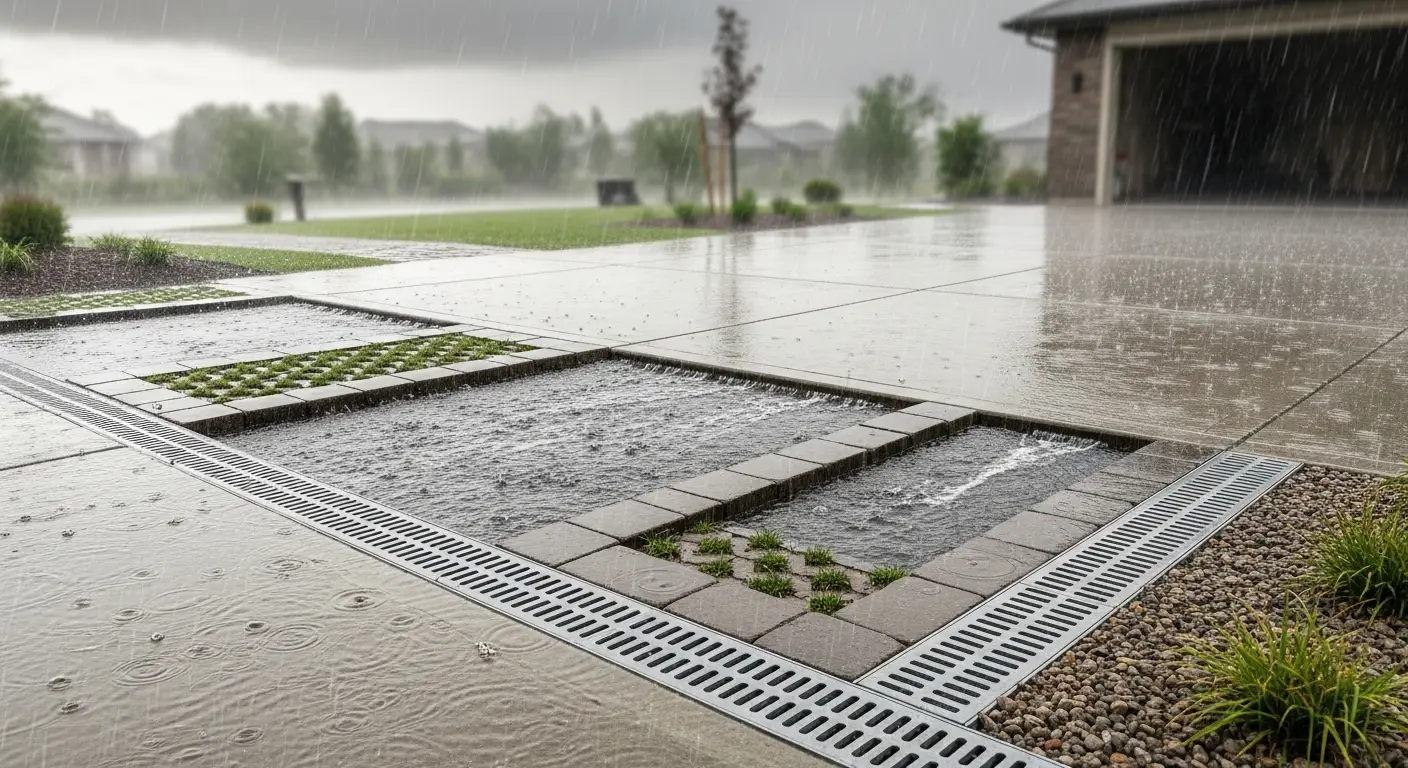
If you live in a region with frequent storms, snowmelt, or intense seasonal downpours, poor drainage can destroy a driveway faster than almost anything else. Standing water leads to potholes, erosion, cracking, muddy surfaces, rutting, and even damage to nearby foundations or garages.
That’s why choosing the right driveway drainage solutions is essential—especially in heavy rain areas where standard grading alone often isn’t enough.
The good news is that there are proven ways to keep water moving away from your driveway and protect your investment long term. In this guide, we’ll cover the best drainage systems that actually work, how to choose the right option, and common mistakes homeowners make.
Why Heavy Rain Ruins Driveways
Before choosing the best driveway drainage solutions, it helps to understand what water is doing to your surface.
Excess rainwater can cause:
- Puddles and standing water
- Gravel washouts
- Asphalt edge failure
- Concrete cracking from freeze-thaw cycles
- Muddy driveway surfaces
- Sinkholes or low spots
- Foundation water intrusion near garages
Experts consistently note that inadequate drainage is one of the top causes of driveway damage and flooding problems.
If your driveway regularly holds water after storms, drainage—not the driveway material itself—is usually the core issue.
1. Proper Driveway Slope and Grading
The most effective drainage solution often starts before pipes or drains are installed.
A driveway should be shaped so water naturally runs off instead of pooling. That means using either:
- A gentle cross slope to one side
- A crowned center that sheds water to both edges
- A downhill grade away from structures
Many drainage professionals recommend around a 1% to 2% slope to encourage runoff and prevent standing water.
Best For:
- New driveway construction
- Existing driveways with puddles
- Gravel driveway rutting
- Water flowing toward garage doors
Why It Works:
Water follows gravity. If the driveway is flat or back-pitched toward your home, no drain system can fully compensate.
2. French Drains Alongside the Driveway
One of the most popular driveway drainage solutions for heavy rain is a French drain.
A French drain is a gravel-filled trench with perforated pipe that collects groundwater and surface water, then redirects it away from the problem area.
Best For:
- Waterlogged driveway edges
- Sloped properties
- Groundwater seepage
- Soft muddy shoulders
Typical Placement:
- Along the uphill side of driveway
- Parallel to retaining walls
- Near garage foundations
- Beside gravel lanes collecting runoff
Why It Works:
Instead of allowing water to saturate soil under the driveway, it intercepts moisture and moves it elsewhere.
3. Channel Drains / Trench Drains Across the Driveway
If water runs down the driveway surface toward a garage or low point, a channel drain is often the best answer.
These linear grated drains are installed flush with the driveway surface to capture flowing water before it reaches structures.
Industry guides note trench drains are especially effective because they intercept water across the full width of a driveway rather than at one small point.
Best For:
- Garage entrances
- Downhill driveways
- Concrete or asphalt surfaces
- Homes with flooded garage thresholds
Why It Works:
It catches sheet flow quickly and redirects it to pipe, dry wells, or storm drainage.
4. Culverts for Rural and Gravel Driveways
If your driveway crosses a ditch, swale, or roadside drainage path, a culvert pipe is often mandatory.
Without one, heavy rain can wash out the driveway crossing or cause severe erosion.
Best For:
- Rural homes
- Long gravel driveways
- Farm entrances
- Roadside ditch crossings
Why It Works:
The culvert allows water to pass underneath the driveway while preserving surface stability.
5. Swales and Berms
Not every drainage solution needs pipe.
A swale is a shallow graded channel that directs runoff naturally across land. A berm is a raised ridge that helps redirect water away from vulnerable areas.
Best For:
- Large properties
- Long driveways
- Landscape-friendly drainage
- Overflow water management
Why It Works:
Swales slow, spread, and redirect stormwater without expensive underground systems.
6. Permeable Driveway Surfaces
Sometimes the smartest drainage solution is letting water soak through instead of forcing it to run off.
Permeable surfaces include:
- Gravel
- Permeable pavers
- Porous asphalt
- Resin-bound permeable systems
These systems reduce puddles and runoff by allowing rainwater to infiltrate through the surface.
Experts frequently recommend permeable materials for rainfall-prone areas.
Best For:
- New driveway installation
- Eco-friendly drainage goals
- Moderate traffic homes
- Areas with runoff restrictions
7. Catch Basins and Area Drains
Where water naturally gathers in one low spot, a catch basin can help.
These grated boxes collect water and connect to underground pipe systems.
Best For:
- Bottom of sloped driveways
- Between garage and driveway apron
- Side yards receiving runoff
- Paved courtyards or turnarounds
Why It Works:
It removes concentrated water from predictable pooling zones.
Best Driveway Drainage Solutions by Driveway Type
Gravel Driveway
Best options:
- Crowned grading
- Side ditches
- Culverts
- French drains
- Added aggregate base
Gravel driveways fail fast when water is ignored.
Asphalt Driveway
Best options:
- Trench drains
- Edge drains
- Regrading low spots
- Crack sealing + drainage correction
Standing water shortens asphalt life significantly.
Concrete Driveway
Best options:
- Channel drains
- Surface slope correction
- Catch basins
- Joint sealing
Concrete handles water better than gravel, but pooling can cause cracks and ice hazards.
How to Know Which Drainage Solution You Need
Ask these questions:
Is Water Sitting Still?
If yes, you likely need better grading or a drain inlet.
Is Water Flowing Fast Across the Surface?
You may need trench drains or swales.
Is the Soil Always Soft or Muddy?
French drains or subsurface drainage may be required.
Is Water Coming From the Roadside Ditch?
A culvert or ditch reshaping may solve it.
Is Water Moving Toward the Garage?
Install a channel drain immediately.
Common Mistakes Homeowners Make
1. Adding More Gravel Only
If drainage is wrong, more gravel just disappears.
2. Building a Flat Driveway
Flat surfaces collect puddles.
3. Using Tiny Pipes
Undersized culverts clog quickly in storms.
4. No Outlet Plan
All drains need somewhere safe for water to go.
5. Ignoring Maintenance
Leaves, sediment, and debris can block even the best systems.
How Much Do Driveway Drainage Solutions Cost?
Typical rough ranges:
| Solution | Typical Cost |
|---|---|
| Regrading driveway | $500 – $3,000 |
| French drain | $1,000 – $8,000+ |
| Channel drain | $1,500 – $6,000+ |
| Culvert install | $1,000 – $5,000+ |
| Catch basin system | $1,500 – $7,000+ |
| Full drainage redesign | $5,000 – $20,000+ |
Costs depend on driveway size, excavation depth, materials, access, and rainfall severity.
What Works Best in Heavy Rain Areas?
For most homes in storm-prone regions, the best system is usually combined drainage:
- Proper slope
- Surface collection drain
- Subsurface French drain where needed
- Safe discharge location
- Annual maintenance
No single product fixes every problem.
When to Call a Professional
Call a drainage specialist if:
- Water reaches your garage
- Driveway washes out repeatedly
- Large puddles remain for days
- Soil sinks near driveway edges
- Mud returns every rainy season
- Previous DIY fixes failed
A professional can diagnose whether the issue is grading, groundwater, runoff volume, or structural failure.
Final Thoughts
The best driveway drainage solutions are the ones designed around how water moves on your property—not generic one-size-fits-all fixes.
In heavy rain areas, successful systems usually combine grading, drains, culverts, or permeable materials to move water safely away before damage occurs.
If your driveway floods, erodes, or turns muddy every storm season, fixing the drainage now is usually far cheaper than replacing the driveway later.
For expert driveway grading, culvert installation, gravel repair, drainage correction, and long-lasting solutions, visit Dirt Road Repairs at https://dirtroadrepairs.com and request a quote today.