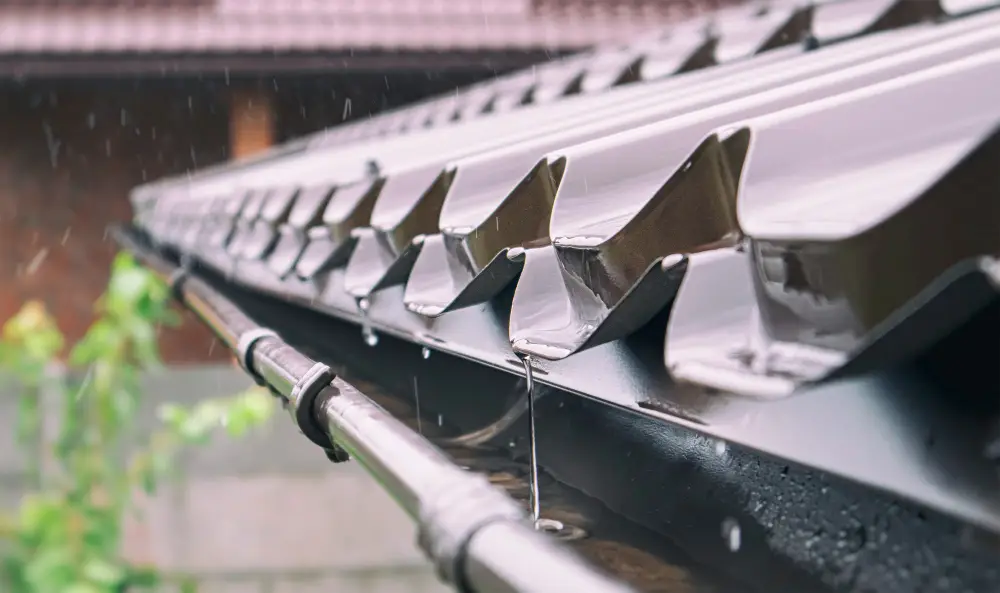
Both downspouts and rain chains move water from gutters to the ground, but they function differently and suit different applications. Downspouts are enclosed pipes that carry water quickly and efficiently. Rain chains are decorative alternatives that allow water to flow visibly down a chain or series of cups. Knowing how each works helps you choose the right option for your property.
How Downspouts Work
Downspouts are vertical pipes connected to drop outlets in the gutter. Water enters through the outlet, flows down through the pipe, and exits at the bottom.
Function & Capacity
Downspouts handle large volumes of water quickly. A three-by-four-inch downspout drains approximately 1,200 square feet of roof area during heavy rain. The enclosed pipe contains water and prevents it from splashing against walls or creating mud at the building perimeter.
Multiple downspouts on a gutter run increase total drainage capacity. This prevents gutters from overflowing during peak rainfall.
Installation Requirements
Installing a downspout requires cutting an opening in the bottom of the gutter and attaching a drop outlet. The downspout sections connect to the outlet and to each other with elbows and straight sections.
Brackets secure the downspout to the building wall every six to eight feet. At the bottom, an elbow directs water away from the foundation. Extensions or buried pipes can carry discharge farther from the building.
Appearance
Standard downspouts are utilitarian. They serve function over form. Available colors match gutter colors and mix with most siding and trim, but downspouts remain visible elements on the building exterior.
Round downspouts and decorative styles offer slightly more visual appeal than standard rectangular forms. These options cost more but may suit buildings where appearance matters.
Maintenance
Downspouts require minimal maintenance when functioning properly. Clogs can occur when debris enters the drop outlet and accumulates in the pipe. Clear clogs by running water from the top or using a plumber’s snake from the bottom.
Check that downspout brackets remain secure and that the pipe has not separated at joints. Occasional tightening of loose brackets keeps the system functioning.
Cost
Downspout materials cost $5 to $10 per linear foot. A 10-foot downspout with elbows and hardware runs $50 to $100 in materials. Installation labor adds $3 to $7 per linear foot, bringing the installed cost to $80 to $170 per downspout.
How Rain Chains Work
Rain chains replace downspouts with chains, cups, or decorative links that guide water from the gutter to the ground. Water flows visibly down the chain rather than through an enclosed pipe.
Function & Capacity
Rain chains handle lower flow rates than downspouts. Water flows down the outside surface of the chain or from cup to cup. Heavy rain can overwhelm the chain, causing water to blow off in wind or splash beyond the intended landing area.
A rain chain handles approximately 300 to 500 square feet of roof area effectively. Larger roof sections or areas with high rainfall intensity need downspouts or multiple rain chains.
Visual Appeal
Rain chains serve as decorative elements. The flowing water creates visual interest, and many designs are attractive even when dry. Copper chains develop patina over time, adding character to the building exterior.
The sound of water flowing down the chain is part of the appeal for some property owners. Others find the sound distracting, especially outside bedroom windows or in areas used for conversation.
Installation Requirements
Installing a rain chain requires a drop outlet or gutter adapter at the top and a basin or splash area at the bottom to receive water.
Remove the existing downspout and attach the rain chain to the drop outlet. Some designs use a clip or hook, while others require a specific adapter piece.
At the ground level, position a basin, decorative pot, or prepared splash area to catch water and allow it to drain or infiltrate into the soil. Without proper preparation at the bottom, water splashes and erodes soil around the chain.
Weather Limitations
Rain chains work best in light to moderate rain conditions. Heavy storms deliver more water than chains can handle, causing overflow and splash.
Wind blows water off the chain, reducing the amount that reaches the basin at the bottom. Water lands several feet away, creating wet areas that the installation was meant to prevent.
Freezing conditions cause ice buildup on chains. The added weight can pull the chain loose or damage the gutter attachment. Ice also blocks water flow, rendering the chain non-functional during winter storms.
Maintenance
Rain chains need cleaning to remove debris that catches on links or accumulates in cups. Leaves and twigs interrupt water flow and create clogs that cause overflow.
Check that the top attachment remains secure. Wind and ice can loosen connections. Inspect the basin at the bottom to ensure it drains properly and has not filled with debris.
Cost
Rain chains range from $30 to $200 depending on materials and design. Basic aluminum chains cost less while decorative copper or brass designs cost more.
Installation is straightforward and many property owners do it themselves, saving labor costs. Professional installation adds $50 to $100 per chain.
Comparing Performance
Direct comparison shows where each option excels and where limitations become apparent.
Drainage Capacity
Downspouts handle high-volume drainage without problems. They work in all weather conditions and rarely overflow when sized correctly.
Rain chains struggle with high volume. Heavy rain and steep roofs deliver more water than chains can guide effectively. Much of the water bypasses the chain and falls directly to the ground.
For buildings with large roof areas or areas with intense rainfall, downspouts are necessary. Rain chains work only on small roof sections or as secondary aesthetic elements rather than primary drainage.
Weather Resistance
Downspouts function in all weather. Rain, snow, ice, and wind do not affect their ability to move water from gutter to ground.
Rain chains fail in several weather conditions. Wind, heavy rain, and ice all interfere with function. Properties in areas with severe weather should not rely on rain chains for primary drainage.
Maintenance Requirements
Downspouts need occasional clog clearing but otherwise require little attention. The enclosed design prevents debris from interfering with flow once water enters the pipe.
Rain chains catch debris and require more frequent cleaning. Every piece of material that would have entered the downspout instead gets caught on the chain or in the cups.
Visual Impact
Downspouts are functional but not decorative. They mix in with the building but do not contribute to aesthetic appeal.
Rain chains are attractive and create visual interest. For property owners who value appearance and are willing to accept functional limitations, chains offer benefits that downspouts cannot match.
Noise Considerations
Downspouts are silent except during very heavy rain when water rushing through creates some sound.
Rain chains make noise whenever water flows. Light rain creates gentle sounds. Heavy rain produces louder splashing. Some people find this pleasant while others find it disruptive, especially at night or near windows.
Best Applications for Each Option
Choosing between downspouts and rain chains depends on the specific situation.
Use Downspouts When
The roof area exceeds 500 square feet per drainage point, the climate includes heavy rain or snow, wind is common, reliable drainage is more important than appearance, or you want a maintenance-free system.
Downspouts are the practical choice for most residential applications. They work everywhere, in all conditions, with minimal maintenance.
Use Rain Chains When
The roof area is small, typically under 500 square feet, the climate is moderate with gentle rain patterns, appearance matters and visual appeal justifies functional compromises, you enjoy the sound of running water, or you want a decorative element on the building exterior.
Rain chains work well on covered porches, small additions, garden sheds, and accent locations where failure during heavy rain does not create problems.
Combining Both Approaches
Some installations use both downspouts and rain chains on the same building.
Place downspouts at primary drainage points that handle most of the roof area. Use rain chains at accent locations like front entrances, near gardens, or at corners where the decorative element improves the building appearance.
This combination provides reliable drainage where it matters while adding visual interest in selected locations.
Dirt Road Repairs installs both downspouts and rain chains for homeowners throughout our service area. We help you determine which option suits each location on your property. Contact us to discuss drainage solutions that balance function and appearance.