Selecting gutters involves more than picking a color that matches your trim. The size and material of your gutter system determine how well it handles rainfall, how long it lasts, and how much maintenance it requires. Making informed choices during the planning stage prevents problems and additional expenses down the road.
Why Gutter Size Matters
Gutters that are too small for your roof will overflow during storms. Water spills over the front edge and falls directly to the ground, defeating the purpose of having gutters at all. This overflow saturates the soil near the foundation, splashes against siding, and can cause the same damage that gutters are meant to prevent.
Gutters that are larger than necessary cost more and add weight to the fascia board. While oversizing does not cause functional problems, it shows a poor use of your budget.
Factors That Determine Gutter Size
Several factors influence the size of gutters your home needs.
Roof Area
Larger roofs collect more rainwater. A 1,000-square-foot roof sheds twice as much water as a 500-square-foot roof during the same storm. Calculating the total roof area that drains to each gutter run tells you how much water that gutter must handle.
To find your roof area, multiply the length and width of each section that drains to a particular gutter. For pitched roofs, multiply the result by a factor that accounts for the slope. Low-pitch roofs use a factor of 1.05, medium-pitch roofs use 1.12, and steep roofs use 1.30.
Roof Pitch
Steeper roofs shed water faster than low-slope roofs. Water runs off quickly and arrives at the gutter in a concentrated flow. This increased flow rate means steeper roofs need gutters with more capacity even if the roof area is the same as a flatter roof.
Local Rainfall Intensity
Different regions receive different amounts of rainfall. More importantly, the rate at which rain falls varies significantly. A slow, steady rain produces less runoff per minute than a brief but intense thunderstorm.
Building codes use a measurement called design rainfall intensity, expressed in inches per hour, to determine gutter capacity requirements. This value is based on the maximum expected rainfall during a five-minute period over a 100-year timeframe. Most areas in the continental United States have design values between two and eight inches per hour. Your local building department can provide the specific value for your location.
Standard Gutter Sizes
Residential gutters typically come in two widths: five inches and six inches, measured across the top opening.
Five-Inch Gutters
Five-inch gutters are standard for most single-family homes. A five-inch K-style gutter handles approximately 5,500 square feet of roof area at a rainfall intensity of one inch per hour. At four inches per hour, capacity drops to about 1,400 square feet.
Most homes have roof areas well within these limits when divided among multiple gutter runs and downspouts. Five-inch gutters provide adequate capacity while keeping material costs reasonable.
Six-Inch Gutters
Six-inch gutters offer about 40 percent more capacity than five-inch gutters. They are appropriate for homes with large roof areas, steep pitches, or locations with high rainfall intensity.
Six-inch gutters also make sense for homeowners who want extra capacity as a margin of safety. The additional cost is modest, and the larger gutters handle extreme weather events better than smaller systems.
Downspout Sizing
Downspouts must be sized to drain the water collected by the gutters. An undersized downspout creates a bottleneck that causes the gutter to overflow even if the gutter itself has adequate capacity.
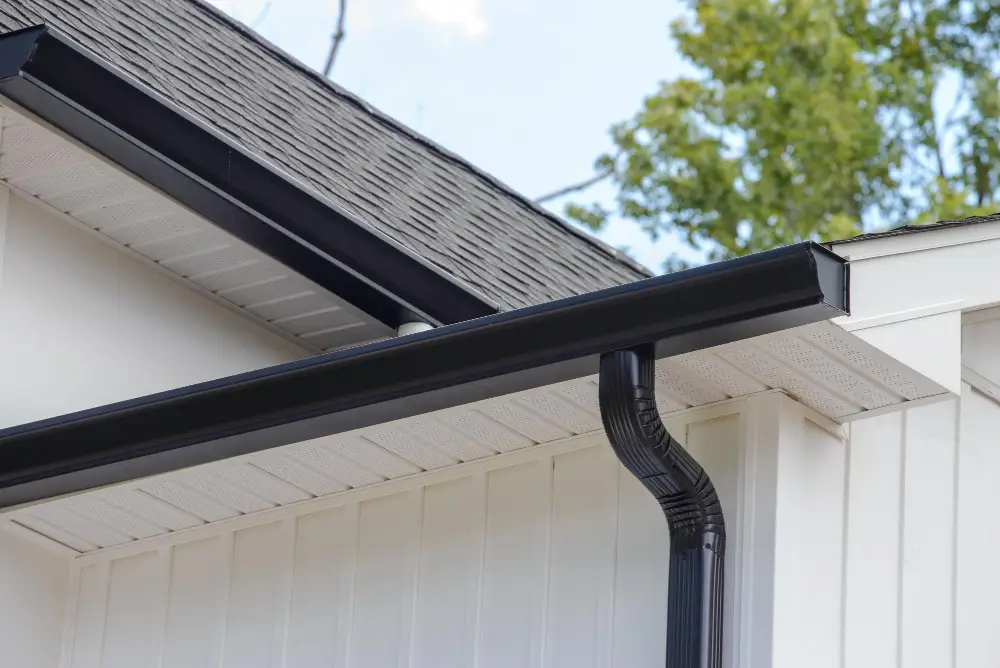
Standard residential downspouts measure either two-by-three inches or three-by-four inches in rectangular form. Round downspouts are also available in three-inch and four-inch diameters.
A two-by-three-inch downspout handles about 600 square feet of roof at four inches per hour rainfall intensity. A three-by-four-inch downspout handles approximately 1,200 square feet under the same conditions.
Most installations include one downspout for every 20 to 30 linear feet of gutter. Adding extra downspouts improves drainage and reduces the load on each one.
Gutter Materials
The material you choose affects cost, appearance, durability, and maintenance requirements. Here are the options available for residential gutters.
Aluminum
Aluminum is the most popular gutter material for homes. It resists rust, weighs less than steel, and costs less than copper or zinc. Aluminum gutters come in a range of painted finishes to match your home’s exterior.
Thickness varies from 0.025 inches for economy grades to 0.032 inches for premium grades. Thicker aluminum resists dents and holds up better under ladder pressure. For most homes, 0.027-inch thickness provides good durability at a reasonable price.
Aluminum gutters last 20 to 30 years with proper maintenance.
Vinyl
Vinyl gutters cost less than any other material and are easy for homeowners to install. The sections snap together without tools or sealant. However, vinyl becomes brittle in cold temperatures and can crack during winter weather. Prolonged sun exposure causes fading and degradation.
Vinyl gutters work best in mild climates and for structures where long-term durability is less important than initial cost.
Galvanized Steel
Galvanized steel gutters are stronger than aluminum and resist damage from ladders, branches, and impacts. The galvanized coating protects against rust, but eventually wears away, especially at cut edges and fastener holes. Once the coating fails, steel gutters corrode quickly.
Galvanized steel gutters typically last 15 to 25 years depending on climate and maintenance.
Copper
Copper gutters cost significantly more than aluminum but last 50 years or longer. Over time, copper develops a patina that ranges from brown to green depending on local conditions. Many homeowners find this weathered appearance attractive.
Copper requires soldered joints rather than sealed or riveted connections. This adds to installation cost and means repairs require specialized skills.
Zinc
Zinc shares many characteristics with copper, including a long lifespan and the development of a patina over time. Zinc costs less than copper but more than aluminum. Like copper, zinc gutters require soldered joints.
Matching Materials to Your Needs
For most homeowners, aluminum gutters in five-inch K-style provide the best balance of performance, appearance, and cost. This combination handles typical rainfall, works with most architectural styles, and lasts for decades.
Choose six-inch gutters if your home has a large or steep roof, your area receives heavy rainfall, or you want additional capacity for peace of mind.
Consider copper or zinc for historic properties, high-end homes, or situations where you want gutters that will last 50 years or more.
Avoid vinyl in regions with cold winters or intense sun exposure. The material cannot handle temperature extremes and will need replacement sooner than other options.
Dirt Road Repairs helps homeowners select the right gutter size and material for their specific situation. We assess your roof area, local rainfall conditions, and budget to recommend a system that performs reliably. Contact us to discuss your gutter project and get a quote made according to your home.