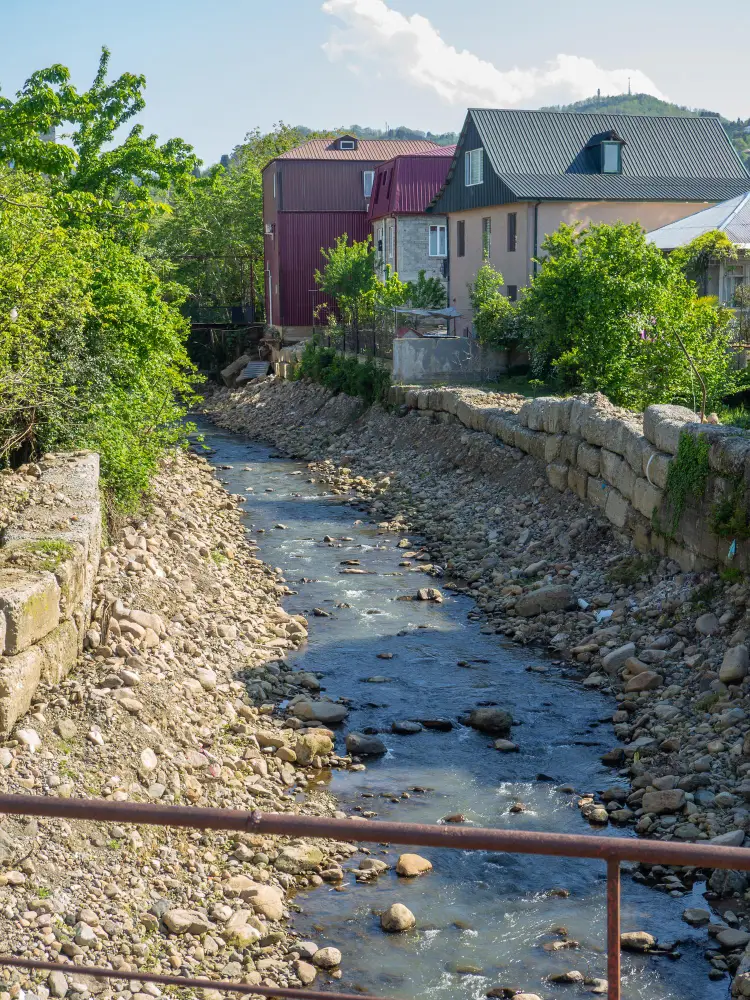
Rural properties face drainage challenges that suburban and urban lots rarely encounter. Larger roof areas, longer distances to suitable discharge points, soil conditions that resist drainage, and the absence of municipal storm sewers all complicate water management. Properties with clay soils, low-lying areas, or seasonal high water tables often struggle with persistent mud and standing water. This guide covers the drainage systems that work best for these conditions.
Challenges of Rural Drainage
Rural properties differ from suburban lots in ways that affect drainage system design and performance.
Soil Conditions
Many rural areas have clay soils that absorb water slowly or not at all. Water that would soak into sandy soil in minutes may sit on clay for days. This creates standing water, mud, and saturated conditions that make outdoor areas unusable.
Soil compaction from vehicle traffic and livestock worsens drainage problems. Compacted soil has reduced pore space and resists water infiltration even when the soil type would otherwise drain adequately.
Distance & Scale
Rural buildings often sit far from suitable drainage outlets. A suburban downspout can discharge onto a lawn that drains to a nearby storm inlet. A rural downspout may need to move water hundreds of feet to reach an appropriate outlet like a pond, ditch, or low area.
The scale of rural buildings also increases drainage demands. Barns, equipment sheds, and agricultural buildings have large roof areas that collect substantial water volumes. A 5,000-square-foot barn roof collects 3,000 gallons during a one-inch rainfall, all of which must go somewhere.
Limited Infrastructure
Rural properties typically lack storm sewers and other municipal drainage infrastructure. Property owners must handle all drainage on their own land or negotiate easements to discharge onto neighboring properties or into natural waterways.
Surface Drainage Systems
Surface drainage moves water across the top of the ground through channels, swales, and graded surfaces.
Swales
Swales are shallow, wide channels that collect and convey water across the landscape. Unlike ditches, which have steep sides and a narrow bottom, swales have gentle slopes and a broad cross-section. This design slows water flow and allows some infiltration while moving excess water toward an outlet.
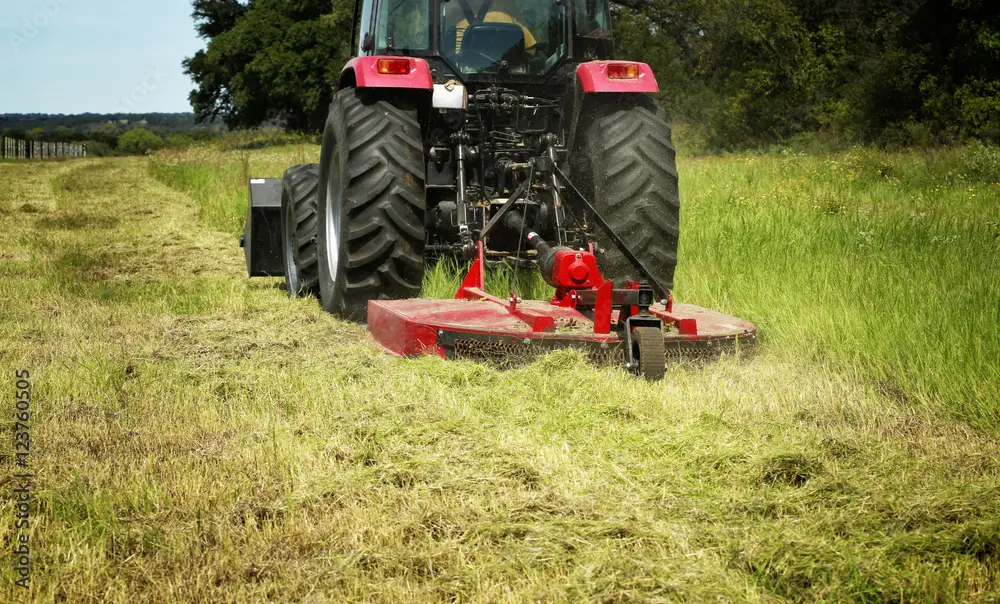
Grass-lined swales work well in rural settings because they mix into lawn and pasture areas. The vegetation stabilizes the channel and filters sediment from the water. Swales require periodic mowing and occasional regrading if erosion occurs.
Swales can intercept sheet flow from large areas, collect discharge from multiple downspouts, and move water around buildings to suitable outlets. They work best on properties with enough slope to maintain water flow but not so much that erosion becomes a problem.
Drainage Ditches
Ditches move water faster than swales because of their steeper sides and deeper channels. They handle larger volumes and work in areas where swales would be too wide to fit.
Rural properties often have existing ditches along road frontages or property boundaries. Connecting building drainage to these ditches provides an outlet for roof runoff and surface water. The connection may be through pipes, swales, or graded surfaces depending on distance and terrain.
Ditch maintenance is important in rural areas. Vegetation growth, sediment accumulation, and beaver activity can block flow and cause backup onto the property. Regular inspection and clearing keeps ditches functioning.
Grading & Surface Drainage
Proper grading moves water away from buildings and toward drainage outlets through gravity alone. The ground surface acts as the drainage system, with slopes directing water where it needs to go.
Effective grading for rural properties establishes:
Positive drainage away from all building foundations Slopes that direct water to swales, ditches, or low areas Crowns on driveways and access roads that shed water to both sides Low points positioned away from high-traffic areas
Grading works best on properties with adequate natural slope. Flat sites may require adding fill to create drainage patterns.
Subsurface Drainage Systems
Subsurface drainage moves water through pipes and channels buried beneath the ground surface. These systems handle water that cannot be managed on the surface due to traffic, aesthetics, or site constraints.
French Drains
French drains consist of a trench filled with gravel surrounding a perforated pipe. Water enters the trench through the gravel, flows into the pipe through the perforations, and travels through the pipe to an outlet.
French drains work well for intercepting groundwater and collecting surface water over a broad area. They can be installed along the perimeter of wet areas, at the base of slopes where water seeps out, and in low spots where water collects.
For rural properties, French drains provide solutions for:
Wet areas around barns and outbuildings Saturated pastures and paddocks Seepage zones on hillsides Persistently muddy driveways
The gravel-filled trench absorbs impact from hooves and vehicle traffic better than open channels. French drains can be installed beneath driveways, parking areas, and high-traffic zones where surface drainage is not practical.
Curtain Drains
Curtain drains are a type of French drain installed specifically to intercept water moving laterally through the soil. They are positioned on the upslope of the area to be protected and cut off water before it reaches problem zones.
A curtain drain across the uphill side of a building site intercepts groundwater that would otherwise seep into the basement or create wet conditions around the foundation. The drain diverts this water around the building to a suitable outlet.
Curtain drains work best in soils with a relatively permeable upper layer over a less permeable lower layer. Water traveling along this interface enters the drain and flows away rather than continuing toward structures or use areas.
Drain Tile Systems
Agricultural drain tile systems use networks of perforated pipes buried beneath fields to lower the water table and remove excess soil moisture. The same technology works for rural residential properties with persistently wet conditions.
Drain tile installations involve burying parallel lines of perforated pipe at depths of two to four feet, spaced 20 to 50 feet apart depending on soil conditions. The pipes drain to a collector line that carries water to an outlet.
The investment in drain tile systems is substantial, but the results can reclaim land that was previously too wet for use. Pastures that stayed muddy through spring become usable weeks earlier. Yards that never dried out become functional outdoor spaces.
Concentrated Discharge Systems
Roof runoff from gutters creates concentrated water flow that requires specific handling. Surface and subsurface systems must account for this concentration to prevent erosion and failure.
Dry Wells
Dry wells are underground chambers that collect water and allow it to soak into the surrounding soil. They handle concentrated discharge from downspouts by spreading it over a larger area below the surface.
A typical dry well consists of a buried chamber made from a large plastic barrel, concrete rings, or a purpose-built infiltration unit. Gravel surrounds the chamber to increase storage capacity and infiltration area. A pipe from the downspout delivers water to the chamber.
Dry wells work best in soils that drain reasonably well. In clay soils, the chamber fills during storms and may overflow before the water can soak away. Sizing the dry well for site conditions and expected rainfall ensures adequate capacity.
Underground Piping
Solid pipes carry water from downspouts to outlets without allowing infiltration along the way. This approach moves water quickly across the property to discharge points that can handle the concentrated flow.
Underground piping for rural properties often runs hundreds of feet to reach suitable outlets. Smooth-wall pipe creates less friction and handles longer runs better than corrugated pipe. Cleanout access points allow for maintenance if clogs occur.
Pipe systems require careful attention to grade. A minimum slope of one percent, or about one inch per eight feet, keeps water moving. Flatter slopes allow sediment to settle and can lead to blockages.
Pop-Up Emitters
Pop-up emitters terminate underground drainage lines with a fitting that opens when water pressure builds and closes when drainage stops. This prevents debris from entering the pipe while allowing discharge during rain events.
Pop-up emitters work well at the end of long underground runs where the pipe emerges in a lawn, pasture, or wooded area. The emitter sits nearly flush with the ground and does not interfere with mowing or other activities.
Handling Muddy Areas
Persistent mud around buildings, in traffic areas, and along paths requires targeted solutions beyond general drainage.
Geotextile Fabric & Gravel
Laying geotextile fabric over muddy soil and covering it with gravel creates a stable surface that sheds water and supports traffic. The fabric separates the gravel from the underlying soil and prevents the stone from sinking into the mud.
This approach works for driveways, parking areas, paths, and high-traffic zones around buildings. Six inches of gravel over fabric provides a stable, well-draining surface in most conditions. Areas with heavy truck traffic may need eight inches or more.
Raised Surfaces
Raising a surface above the surrounding grade allows water to drain off rather than pooling on top. This works for building pads, equipment parking areas, and outdoor storage.
Import fill material to raise the surface, compact it thoroughly, and cover with gravel or other surfacing. The raised area sheds water to adjacent drainage systems.
Sacrificial Areas
Sometimes the best approach to persistent mud is designating specific areas to contain it. Gates, waterers, and feeding stations in pastures will have mud regardless of drainage efforts. Concentrating these activities in one area keeps the rest of the property cleaner.
Heavy-use areas can be improved with concrete pads, rubber mats, or deep gravel beds. These surfaces hold up to concentrated traffic and can be cleaned periodically.
Designing a System for Your Property
Effective rural drainage usually combines multiple approaches. Surface swales may collect water from building roofs and direct it to a drainage ditch. French drains may intercept groundwater before it reaches a barn. Underground pipes may carry downspout discharge to a dry well in an outlying area.
Assessment of site conditions comes first. Identify water sources, flow paths, problem areas, and possible outlets. Consider soil types, slopes, infrastructure, and budget.
Dirt Road Repairs designs and installs drainage systems for rural properties throughout our service area. We address the specific challenges of clay soils, large buildings, limited outlets, and persistent mud. Contact us to schedule a site visit and develop a drainage plan for your property.