When people picture building a house, they picture the foundation going in, the framing going up, and the finishes going on. What they rarely picture is everything that has to happen to the raw ground before any of that can start. On a wooded, sloped lot in the north Georgia hills, the land clearing stage is where a buildable site gets made out of trees, brush, and uneven dirt. Skip it or rush it, and every stage after it suffers. Do it right, and the build sits on solid, well-drained ground from day one.
Let me walk through what land clearing for new construction actually involves, step by step, and why each part matters before the first foundation is dug.
Why Clearing Comes First
A raw lot is not ready to build on, and not just because of the trees. The ground has to be opened up, cleaned out, and regraded so that crews, equipment, and the structure itself have a stable place to work and sit. Clearing is the stage that takes a portion of the woods and turns it into a construction site.
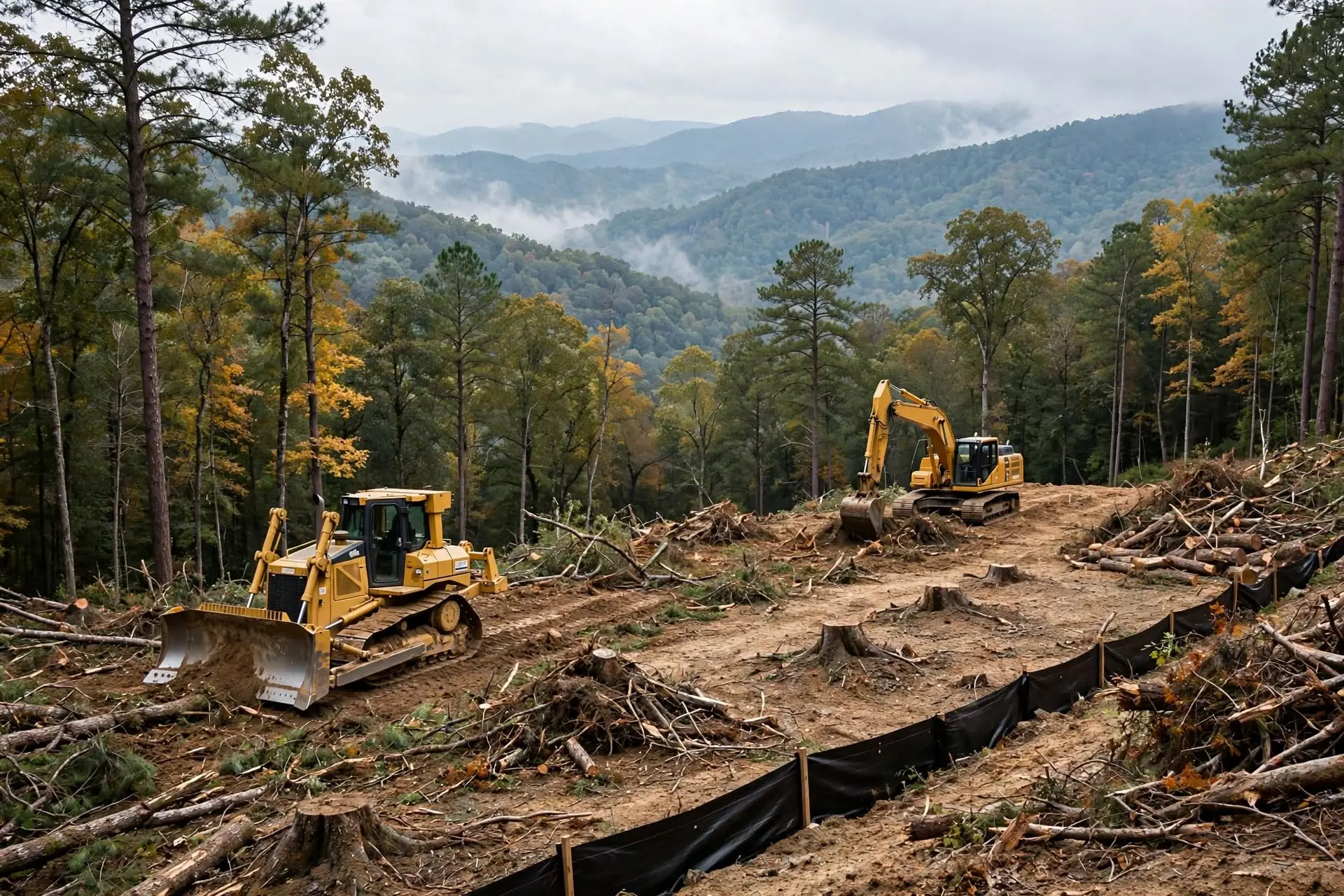
On a typical lot around Dahlonega, that means dealing with standing timber, thick undergrowth, stumps and roots, rocks, and a grade that rolls and drops. Each of those has to be handled in order, because the next stage of the build depends on the ground being clean, stable, and sloped to drain. The foundation, the driveway, the utilities, and the drainage all start from the cleared and graded site.
Clearing the Trees & Brush
The first visible stage is removing what grows on the lot.
Taking Down the Trees
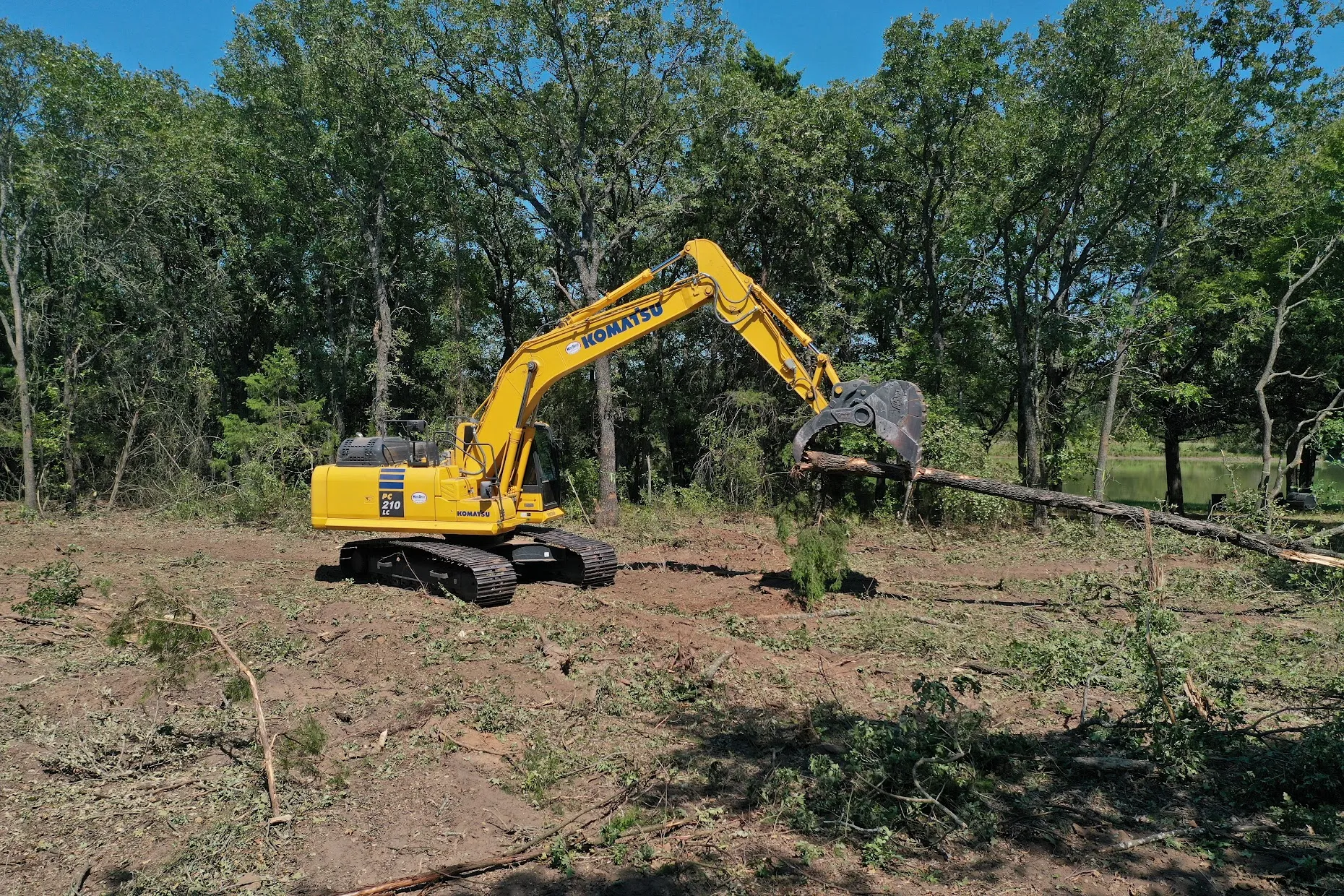
Trees in the building footprint and the work area come down first. The ones that have to go get cut, and the usable timber or logs get hauled off or set aside. Trees close to the building but outside the footprint sometimes stay, since keeping mature trees for shade and looks is worth doing when they do not interfere with the work.
Clearing the Undergrowth
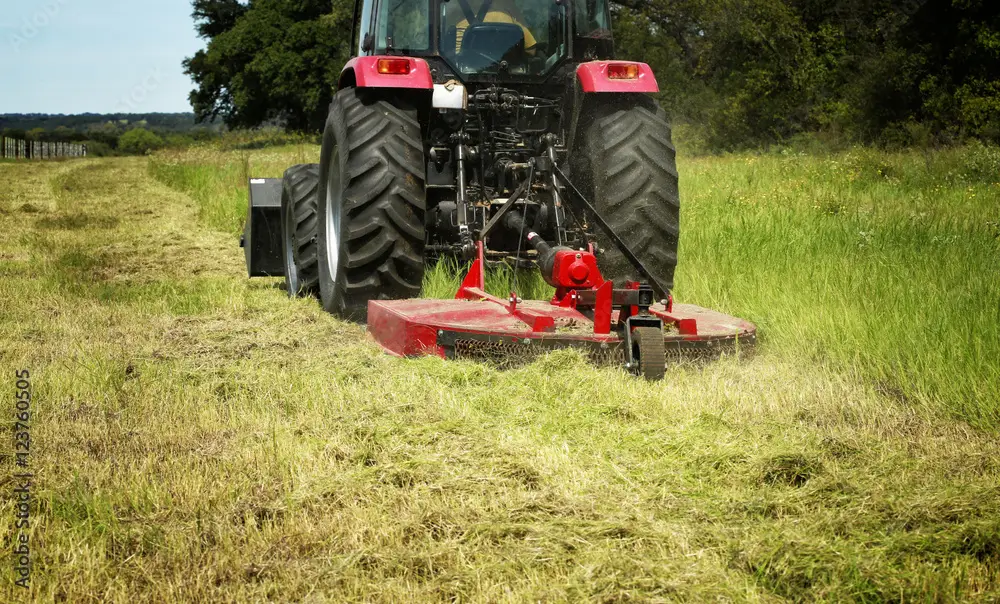
Once the trees are down, the brush, saplings, and ground growth get cleared out. Brush hogging knocks down the thick undergrowth fast and opens up the lot so the crew can see and reach the ground. This is the stage that turns a tangle of woods into open, workable dirt.
Pulling Stumps & Roots
Cutting a tree down leaves the hardest part still in the ground, which is the stump and its root system.
Stumps and roots have to come out of the building area, because leaving them creates two problems. First, they get in the way of digging the foundation and running utilities. Second, as buried wood rots over the years, it leaves voids in the soil that can cause the ground above to settle and sink. A foundation sitting over rotting roots is a foundation sitting on ground that will move. So the stumps get pulled or ground out and the roots cleared, leaving soil that will stay put.
Hauling Off the Debris
All that clearing produces a lot of material, and it has to go somewhere.
Trees, stumps, brush, and roots pile up fast, and the site cannot move forward until the debris is gone. Some of it gets hauled off the lot, some gets chipped into mulch, and some usable wood gets kept. A clean site is not just tidier. It is safer to work on and gives the crew clear access to the ground for the stages that follow. Leaving debris scattered around slows every job that comes after.
Dealing with Rock & Obstacles
The north Georgia hills hide a lot of rock, and the clearing stage is when it turns up.
Large rocks and boulders in the building area have to be broken up or dug out and moved, since they get in the way of the foundation and the utilities. This is one of the parts of clearing that can surprise an owner, because you never know how much rock is down there until the digging starts. A lot with a lot of rock takes more time and equipment to clear, and it is better to find that out at the clearing stage than after the build is underway.
Rough Grading the Site
With the lot cleared of trees, stumps, debris, and rock, the ground gets its first shaping.
Rough grading moves the dirt to bring the site close to its planned levels and builds in the drainage. Crews cut down the high spots, fill the low ones, and slope the ground so water runs away from where the house will sit. This is the stage that sets the drainage into the site itself, which matters enormously on red clay that sheds water and on grades that send runoff downhill. A site rough graded to drain gives the foundation a dry, stable base. A site left unleveled sends water toward the house from the start.
Why Local Conditions Shape the Work
Everything about clearing a lot here is driven by two local facts, which are the slope and the clay. The grades mean more earth has to be moved and more care taken with drainage. The clay means the ground has to be worked at the right moisture and sloped well, since clay holds water and turns soft when wet. A crew that clears and grades these lots regularly reads the ground, the rock, and the water in a way that keeps the later stages of the build from running into trouble.
Setting the Stage for Everything That Follows
Land clearing is the quiet stage that decides how smoothly the rest of a build goes. It takes a raw, wooded, sloped lot and turns it into a clean, stable, well-drained site ready for a foundation. The trees come down, the brush gets cleared, the stumps and roots come out, the debris gets hauled off, the rock gets handled, and the ground gets rough graded to drain. Each step sets up the next, and getting them right on north Georgia’s clay and slopes is what lets the foundation, the utilities, and everything above them sit on ground that holds. The first foundation is dug only after the land is ready to hold it.