If you are building on a lot in the north Georgia hills, grading is the step that makes everything after it possible. It is the work of shaping the ground so the site drains, sits level where it needs to, and gives the house a firm place to stand. What trips up a lot of builders and property owners is that grading is not one job. It comes in two stages, rough grading and finish grading, and each one does something different. Knowing which is which saves you from paying for the wrong work at the wrong time.
Let me walk through what each stage does, how they differ, and what residential grading in Dahlonega, GA actually calls for on a real building site.
What Grading Does for a Build
Grading sets the stage for the whole project. Before a foundation gets poured or a driveway goes in, the ground has to be moved into the right shape. That means cutting down the high spots, filling the low ones, and sloping the site so water runs away from where the house will sit instead of toward it.
In north Georgia, this matters more than it does on flat ground. The terrain here rolls and drops, and the soil is red clay that sheds water fast and turns soft when it stays wet. A site graded wrong sends rainwater into the foundation, pools it in the yard, and washes out the driveway. A site graded right moves water off the property and gives everything built on top of it a solid start.
Rough Grading Comes First
Rough grading is the heavy first pass. It is where the big earthwork happens and the site starts to take its planned shape.
What Rough Grading Involves
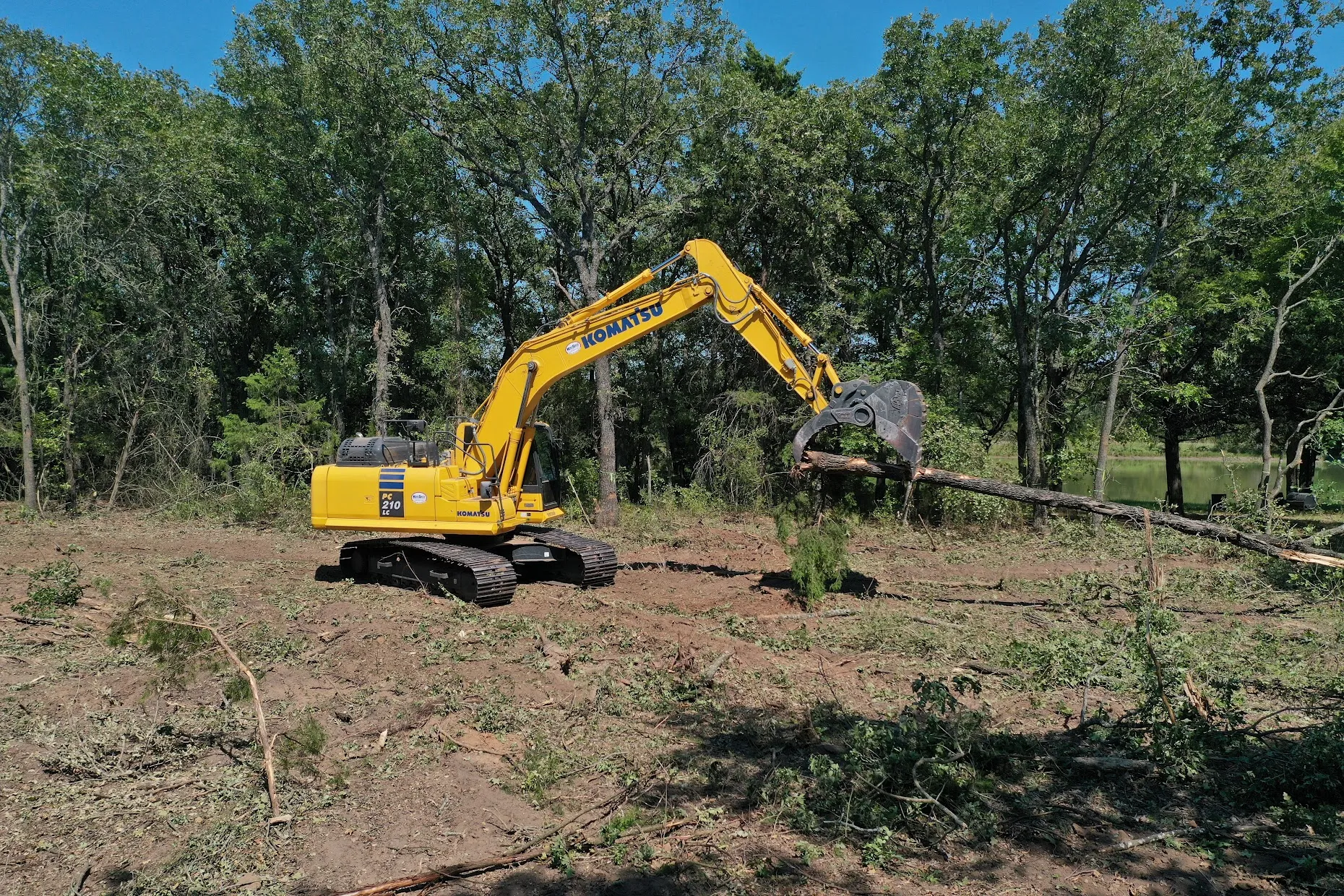
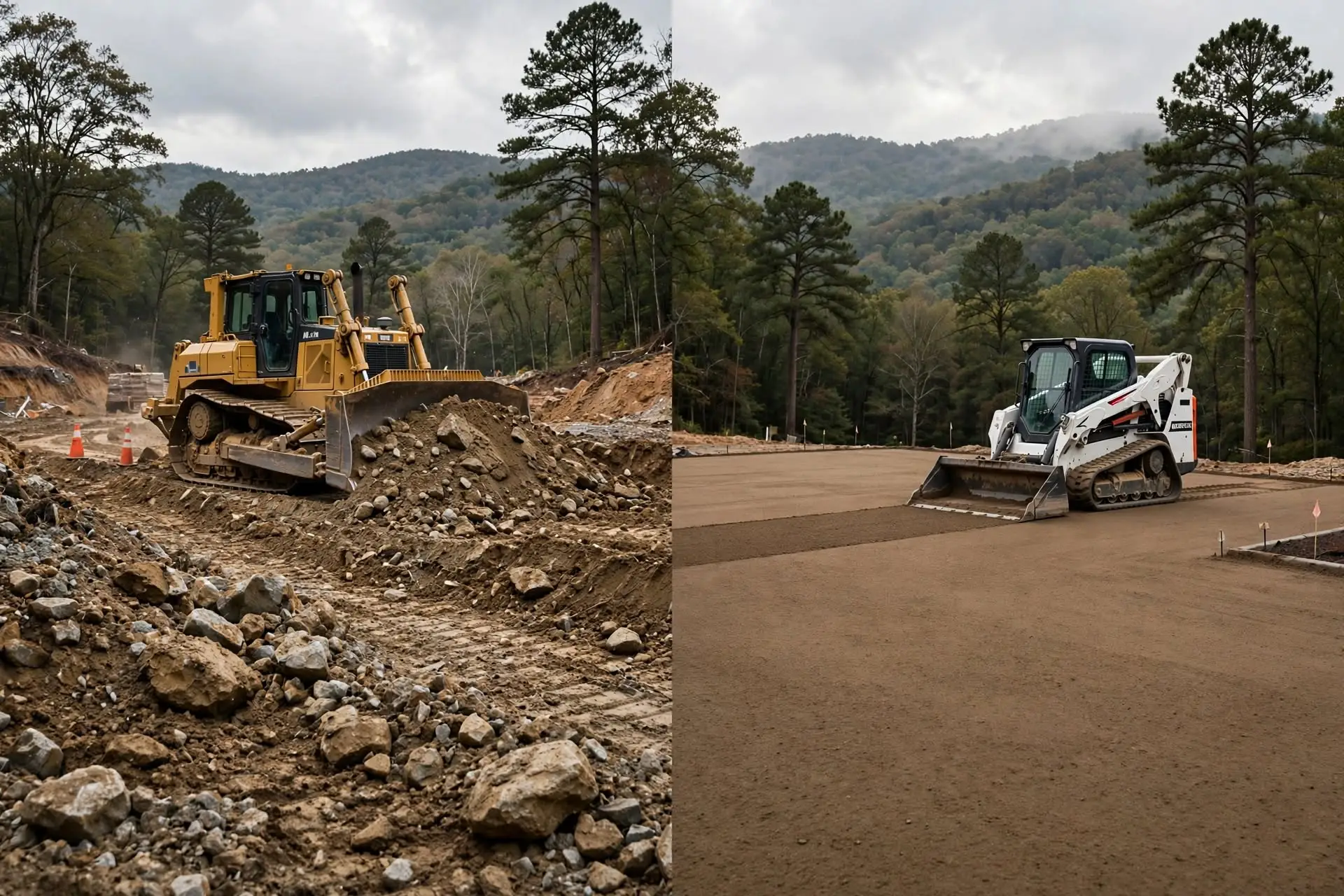
During rough grading, crews move large amounts of dirt to bring the site close to its planned levels. They cut into slopes, build up pads where structures will go, and carve the rough contours for drainage. This is the stage that uses the big machines, since it is about moving volume and setting the overall form of the lot.
The goal of rough grading is not a pretty finished surface. It is getting the ground to the right general heights and slopes so the next stages have something to work with. After rough grading, the site looks raw, but the bones are in place.
Why It Sets Everything Up
Everything that follows rides on the rough grade being right. The foundation, the drainage, and the driveway all depend on the site sitting at the correct levels with water flowing the right way. If the rough grade sends water toward the house, no amount of finish work fixes that later. This is the stage where the drainage plan gets built into the dirt itself.
Finish Grading Comes Second
Finish grading is the careful second pass that turns the rough site into a usable surface.
What Finish Grading Involves
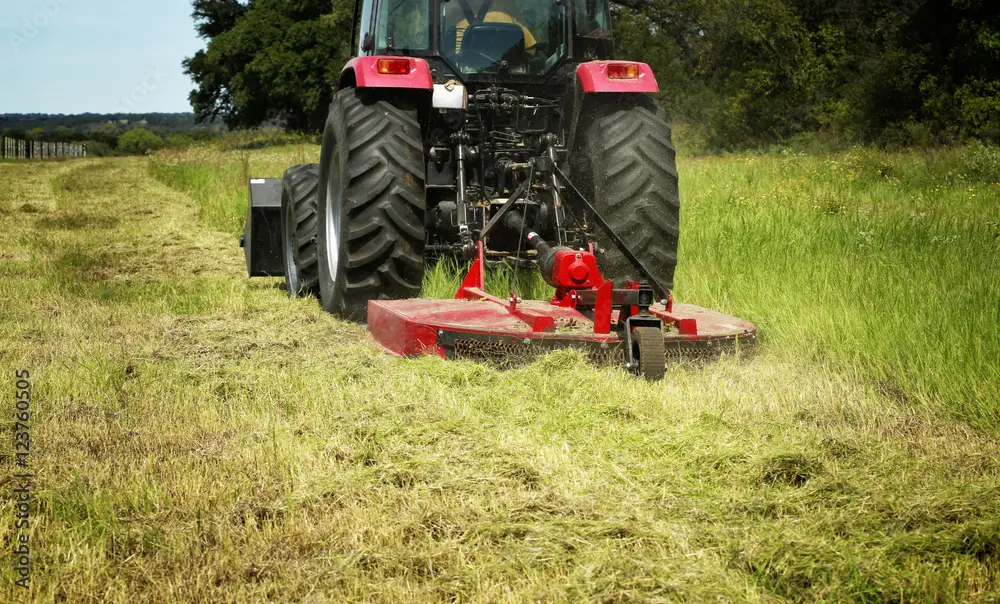
Finish grading smooths and fine-tunes the surface that rough grading left behind. Crews level the ground to its final heights, smooth out the ruts and clumps, and prepare the surface for whatever goes on top, such as sod, seed, a driveway base, or a walkway. It is precise work done with smaller equipment and hand tools, aimed at a clean, even result.
This stage also dials in the final slopes right around the house and the yard, making sure water moves off at the correct angle. It is the difference between a yard that drains and one that holds puddles by the back door.
Why It Matters for the Finished Look & Function
Finish grading is what makes a site look done and work right day to day. A good finish grade gives you a smooth yard, a firm driveway base, and water that runs where it should. Skip the care at this stage and you get a lumpy yard, a driveway that ruts, and low spots that collect water after every rain.
How the Two Stages Differ
The clearest way to keep them straight is to think about scale and purpose.
Rough grading is about big earth movement and getting the site to its general shape and drainage. It uses large equipment and deals in volume. Finish grading is about precision and the final surface, using smaller tools to smooth and level the ground for what goes on top. One sets the form, the other sets the finish. Both are needed, and they happen in that order.
Trying to skip rough grading and jump to finish work leaves the site sitting at the wrong levels with bad drainage under a smooth surface. Trying to stop after rough grading leaves you with a raw, uneven lot that will not drain right around the house. The two stages work as a pair.
What North Georgia Builds Actually Need
On a typical building site in the north Georgia hills, you need both stages done with the local ground in mind. The rough grade has to account for the slope and cut the drainage into the clay so water leaves the site. The finish grade has to smooth the surface and set the final slopes so the yard drains and the driveway base sits firm.
The red clay is the piece that makes local know-how pay off. A crew that grades this soil regularly knows how it moves, when it is too wet to work, and how to slope a site so the clay sheds water instead of trapping it. Grading done without that knowledge tends to fail the first wet season.
Getting the Grade Right the First Time
Rough grading and finish grading are two halves of the same job, and a solid build needs both. Rough grading moves the earth and sets the site to its planned shape with the drainage built in. Finish grading smooths that ground into a usable surface with the final slopes dialed in. On north Georgia clay and slopes, getting both stages right is what keeps water off your foundation and your driveway firm underfoot. Plan for the two stages from the start, work the clay when it is ready, and you set your build on ground that drains and holds for the long run.