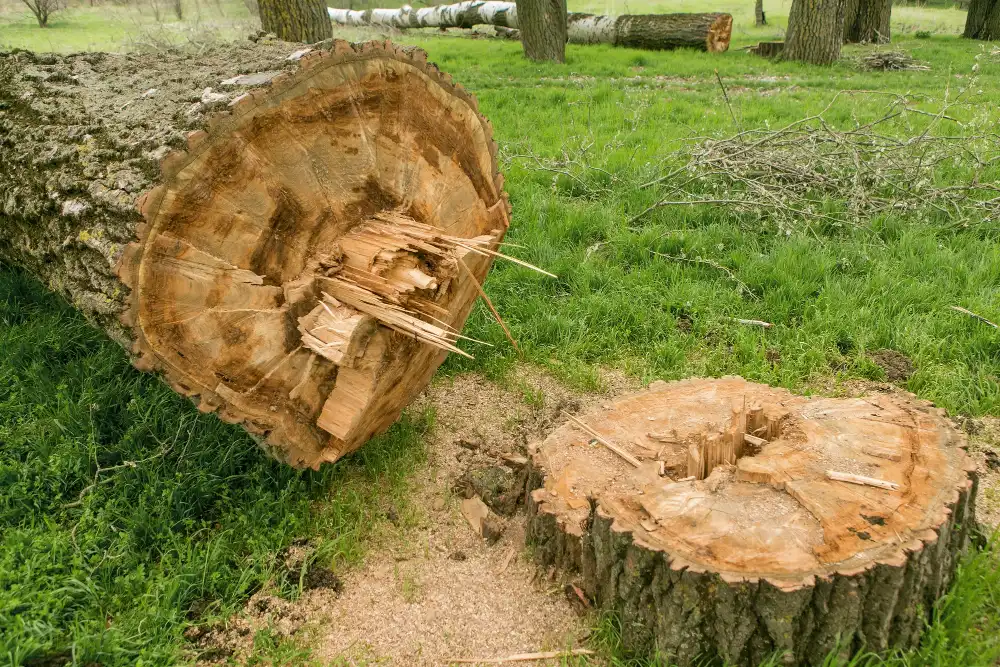
A tree came down and now you are staring at a stump. Maybe you cut it yourself, maybe a storm took the tree, maybe it was sitting there when you bought the place. Either way, it is in the ground and you want it gone. Now comes the part most people do not think about until they start calling around. There are two ways to handle it, and they are not the same job.
Let me lay out the difference so you can pick the one that fits your yard and your wallet.
The Two Methods Are Not the Same Thing
People use the terms like they mean the same thing, but they describe two ways of going about it.
Stump grinding takes a machine with a spinning wheel of teeth and chews the stump down below ground level. The wheel grinds the wood into chips, working down a few inches under the surface. The roots stay in the ground. What you are left with is a pile of wood chips and a hole where the stump used to sit.
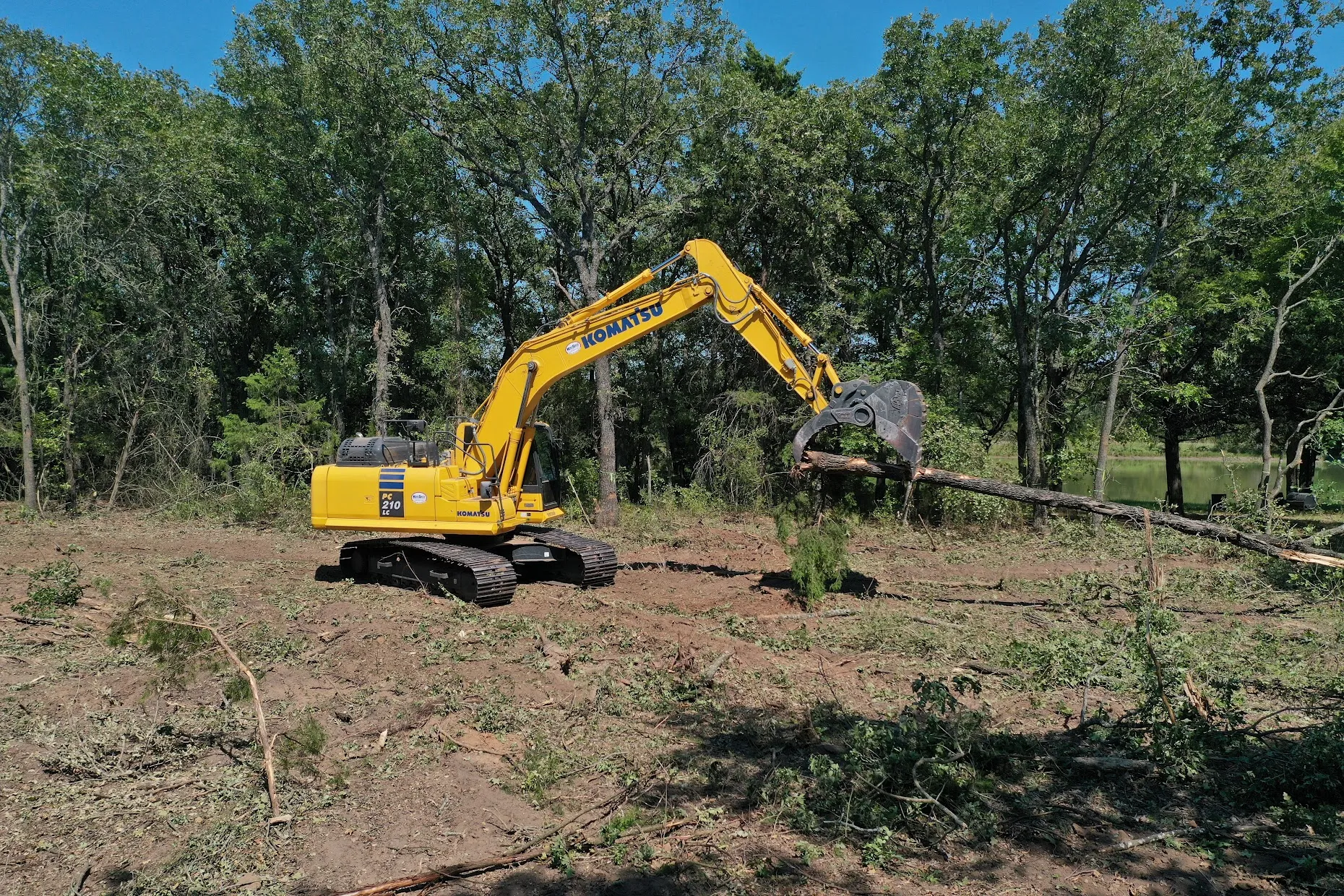
Stump removal pulls the entire thing out, roots and all. A machine drags the stump and its root system up out of the dirt. This leaves a bigger hole and a bigger mess, because tree roots spread out wide and run deep.
That root question drives most of the decision, so let me get into it.
When Grinding Makes Sense
For most yards, grinding is the route folks take, and here is the reasoning.
It Costs Less & Takes Less Time
Grinding is faster. A crew rolls up, sets up the machine, and a single stump can be done in well under an hour for the common sizes. Less labor and less time means a smaller bill. You are looking at a fraction of what full removal runs.
It Leaves Your Yard Mostly Intact
Since the roots stay put, the ground around the stump barely gets touched. No giant crater to fill, no torn-up grass for ten feet in every direction. The chips can fill the hole, and grass grows back over the spot in a season.
The Wood Chips Have a Use
The chips a grinder leaves behind work as mulch. You can spread them around beds or pile them off to the side. Free material out of a job you were paying for anyway.
When Removal Is the Better Call
Grinding wins most of the time, but not always. A few situations call for pulling the whole thing.
You Are Building or Planting on the Spot
If you plan to put a structure where the stump sits, leftover roots get in the way. A shed slab, a patio, a fence post, anything that goes into the ground. Same goes for planting a new tree in the exact spot. Old roots crowd the new ones, so clearing them out gives the new tree room.
The Roots Are Causing Trouble
Roots that lift a driveway, push against a foundation, or crack a walkway need to come out. Grinding the top does nothing for roots that are already on the move underground.
You Want a Clean Slate
Some folks just want it all gone with nothing left to think about. Removal does that, at the cost of a bigger hole and a bigger price tag.
What Happens to the Roots Left Behind
This is the thing that trips people up after a grind. The roots stay in the ground, so people wonder what becomes of them.
They rot. Over a few years the root system breaks down on its own and feeds the soil as it goes. For the vast majority of yards, this causes no trouble at all. The roots are not going to sprout a new tree once the stump is ground out below the surface.
A handful of species do try to send up shoots from the roots after grinding. If you had one of those, a little follow-up keeps the sprouts in check until the roots give up. Your crew can tell you if the tree you took down is one to watch.
How to Decide
Run through a short mental checklist. Are you building or planting right on the spot. Are the roots already damaging something. Do you need the ground cleared all the way down for some reason. If you answered no to all of that, grinding is almost certainly your move. It is cheaper, faster, and easier on the yard.
If you said yes to any of them, removal earns its higher price.
One more thing worth saying. Both jobs go better with the right equipment and someone who has done it before. A grinder is a serious machine, and a stump full of hidden rocks or metal can wreck the teeth and send debris flying. This is one of those tasks where bringing in a crew saves you a rental headache and a trip to the emergency room.
The Bottom Line
A stump does not have to sit in your yard collecting weeds and stubbing your mower. For day-to-day yard cleanup, stump grinding gets it gone fast and keeps your costs down. For the cases where roots have to go too, removal is there to handle it. Take a look at what you want that patch of ground to do, and the choice sorts itself out.