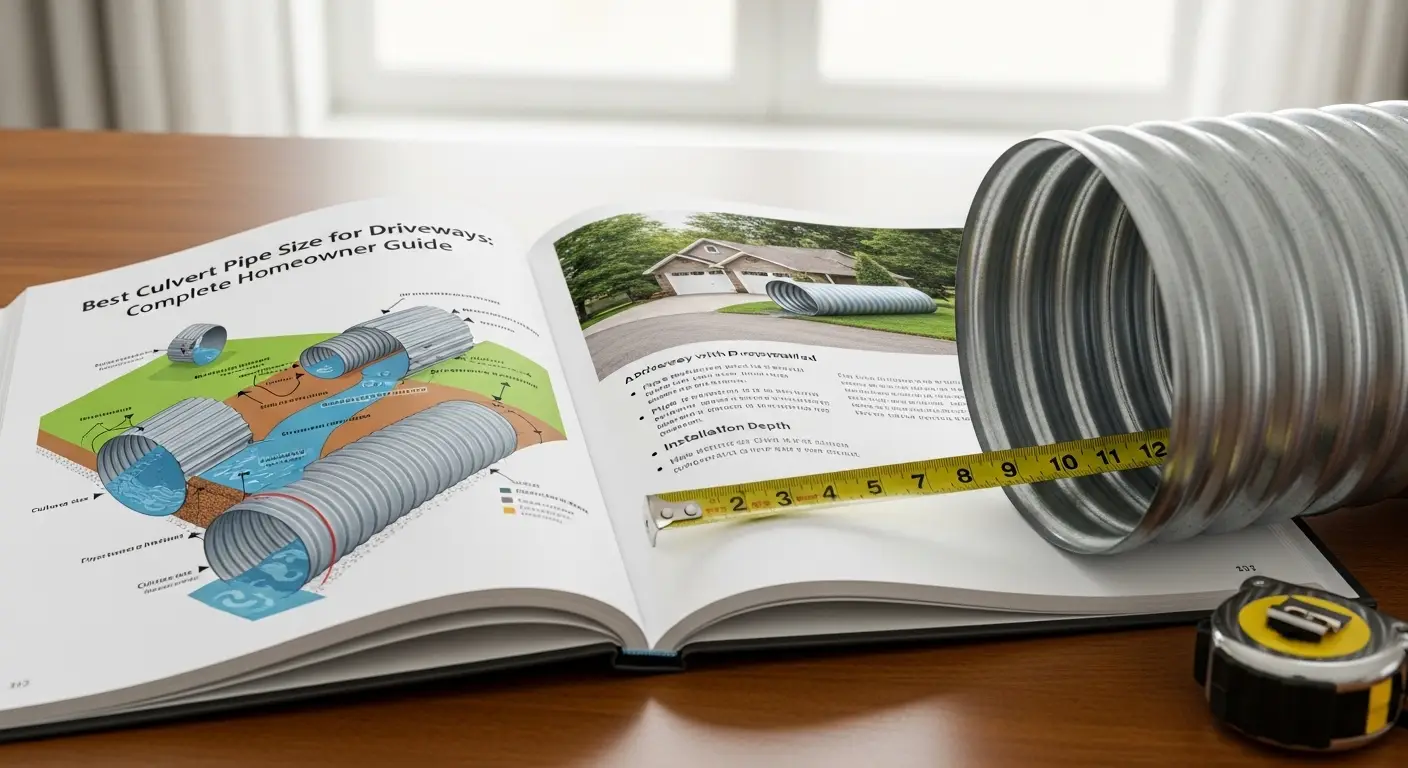
If you’re building a new driveway or replacing an old crossing, one of the most important decisions you’ll make is choosing the right culvert pipe size driveway installation requires. Pick a pipe that’s too small, and it can clog, overflow, wash out your driveway, or fail during heavy rain. Choose the correct size, and you’ll protect your property, improve drainage, and avoid expensive repairs for years.
Many homeowners assume any pipe will work—but driveway culverts need to be sized based on water flow, ditch width, soil cover, traffic load, and local code requirements. In many areas, municipalities even require permits and specify minimum diameters.
This complete guide explains how to choose the best culvert pipe size driveway project, common residential sizes, material options, and mistakes to avoid.
What Is a Driveway Culvert?
A driveway culvert is a pipe installed beneath a driveway entrance or road crossing that allows water to flow through a ditch, swale, or drainage channel without washing out the driveway surface.
Culverts are commonly used for:
- Rural gravel driveways
- Roadside ditch crossings
- New home construction entrances
- Farm and acreage access roads
- Drainage improvements for low spots
Without a properly sized culvert, water may back up, erode the driveway, or flood nearby property. Poorly sized culverts are a common cause of driveway washouts.
Why Culvert Pipe Size Matters
Choosing the right culvert pipe size driveway installation is critical because pipe diameter directly affects how much water can pass through.
If the pipe is too small:
- Water overtops the driveway
- Sediment and debris clog the pipe faster
- Erosion increases around the entrance
- Driveway edges wash out
- Repair costs rise quickly
If the pipe is properly sized:
- Water flows freely during storms
- Less maintenance is needed
- Longer driveway lifespan
- Better drainage performance
- Lower risk of failure
Common Culvert Pipe Sizes for Residential Driveways
Most residential driveway culverts fall between 12 inches and 24 inches in diameter, depending on drainage needs.
| Culvert Diameter | Best For | Notes |
|---|---|---|
| 12 inch | Very small drainage swales | Often minimum for light flow only |
| 15 inch | Small residential ditches | Better than 12″ where debris exists |
| 18 inch | Most standard driveways | Common minimum required by many towns |
| 24 inch | Heavy runoff / rural areas | Great for larger drainage volume |
| 30 inch+ | Streams / major runoff | Usually engineered applications |
Several municipalities specify 18-inch minimum driveway culverts regardless of ditch size.
That means even if a 12-inch pipe seems enough, code may require larger.
Best Culvert Pipe Size Driveway Guide by Situation
Small Residential Lot
If your property has a shallow roadside ditch and limited runoff, an 18-inch culvert is often the safest choice.
Why:
- Handles leaves and debris better than 12″
- Meets many local minimums
- Lower clog risk
- Affordable material cost
Rural Gravel Driveway
For long gravel driveways or roadside ditches carrying seasonal runoff, 18-inch to 24-inch is usually better.
Rural roads often experience:
- Faster runoff
- Snowmelt surges
- Mud and sediment flow
- Heavy rain ditch movement
A larger pipe gives more capacity and durability.
Steep Property or Heavy Rain Region
If your property drains quickly downhill or gets intense storms, consider 24-inch or larger depending on drainage calculations.
This is especially common in:
- Hillside lots
- Mountain areas
- Open farmland
- Flood-prone zones
Stream Crossing or Constant Water Flow
If the driveway crosses an active creek or year-round channel, professional sizing is strongly recommended. You may need multiple pipes, a box culvert, or 30″+ diameter pipe.
How to Determine the Right Culvert Pipe Size
1. Measure the Ditch Width and Depth
Start by measuring:
- Width of ditch top
- Bottom width
- Water depth after storms
- Slope direction
This helps determine required pipe length and likely flow volume.
2. Observe Water During Heavy Rain
Watch the ditch during a major rain event:
- Is flow slow or fast?
- Does water back up?
- Is there debris?
- Does water overflow banks?
Fast-moving water usually needs more capacity.
3. Consider Debris Load
Leaves, sticks, mulch, and gravel reduce usable pipe opening.
For debris-prone areas, upsizing from 15″ to 18″ or from 18″ to 24″ is often smart.
4. Check Local Regulations
Many counties and towns regulate driveway culverts. Some require permits, inspections, or minimum diameters. Certain municipalities publish driveway culvert requirements with set minimum sizes.
Always verify before installation.
Best Culvert Pipe Materials for Driveways
Pipe size matters—but material matters too.
HDPE Plastic Pipe
Popular modern option because it is:
- Rust resistant
- Lightweight
- Affordable
- Easy to install
Excellent for residential driveways when installed correctly.
Corrugated Metal Pipe (CMP)
Strong and common for heavy-duty applications.
Pros:
- High load strength
- Good for equipment traffic
- Traditional choice
Cons:
- Can corrode over time in wet soils
Reinforced Concrete Pipe
Best for permanent high-load applications.
Pros:
- Extremely durable
- Long lifespan
- Great for commercial or farm traffic
Cons:
- Heavy
- Higher install cost
Some municipalities specifically approve concrete, metal, and double-wall plastic pipe types.
How Long Should a Driveway Culvert Be?
Length depends on driveway width plus side slopes.
Typical residential lengths:
| Driveway Width | Common Pipe Length |
|---|---|
| 10 ft | 20 ft pipe |
| 12 ft | 20 ft pipe |
| 14 ft | 24 ft pipe |
| 16 ft+ | 24 ft to 30 ft |
You need extra length beyond the driveway surface so side slopes remain stable and safe.
Cost by Culvert Pipe Size Driveway Projects
Prices vary by material and region, but common retail examples show the price jump as diameter increases.
Examples of consumer listings include:
- 12-inch HDPE pipe
- 18-inch HDPE pipe
- 24-inch steel or HDPE pipe
Larger diameters can cost several hundred dollars more per section.
Installed projects usually cost more because of:
- Excavation
- Bedding stone
- Delivery
- Grading
- Backfill compaction
- End treatment
Common Mistakes Homeowners Make
Choosing the Cheapest Small Pipe
A smaller pipe may save money upfront—but can fail quickly if undersized.
Ignoring Cover Depth
Every pipe needs proper soil cover above it to support vehicle weight.
Poor Slope Installation
Too flat = standing water
Too steep = erosion/scour
No Headwalls or Erosion Control
Riprap, stone aprons, or stabilized ends can greatly extend culvert life.
Skipping Permits
Many areas regulate roadside drainage crossings.
Should You Oversize a Driveway Culvert?
In many residential cases: yes, moderately.
Going from 15″ to 18″ or 18″ to 24″ can provide:
- Better storm protection
- Less clogging
- Longer maintenance intervals
- More resilience for future weather extremes
But oversizing too much can increase cost unnecessarily or complicate installation.
When to Call a Professional
You should hire a contractor or drainage expert if:
- Water overtops driveway now
- Existing culvert collapses repeatedly
- You have stream flow, not ditch flow
- Property floods during storms
- Soil erodes around entrance
- Permit requires engineered sizing
Professionals can calculate flow rates, proper slope, and long-term performance.
Quick Rule of Thumb
For many standard homes, the safest starting point for culvert pipe size driveway planning is:
- 18-inch = common standard residential choice
- 24-inch = better for rural or heavier runoff
- 30-inch+ = special engineered conditions
Always verify with local code and site conditions.
Final Thoughts
The best culvert pipe size driveway project depends on runoff volume, ditch size, debris load, driveway traffic, and local regulations. While smaller pipes may look cheaper, undersized culverts often cause washouts, flooding, and repeat repairs.
For many homeowners, an 18-inch or 24-inch culvert offers the best balance of cost, durability, and drainage performance.
If you’re unsure what size your driveway needs, getting expert help can save thousands in future repairs.
For professional driveway drainage solutions, culvert installation, grading, and gravel road repair, visit Dirt Road Repairs and request a quote today.