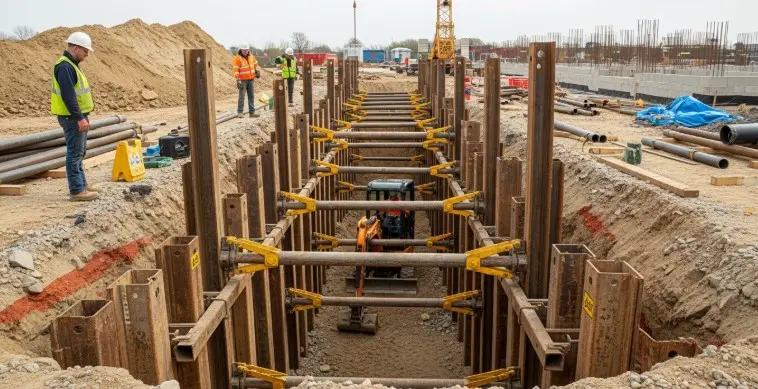
What Is Shoring in Excavation? (Complete Construction Guide)
Excavation is one of the most hazardous phases in any construction project. Whether you’re digging for a basement, utility trench, or deep foundation, unstable soil can collapse without warning leading to structural damage, costly delays, or even fatal accidents. This is where shoring becomes critical.
Understanding what is shoring in excavation is not just a technical necessity, it’s a safety and compliance requirement that directly impacts project success, especially in urban or high-risk environments.
Short Answer: What Is Shoring in Excavation?
Shoring in excavation is a temporary or permanent support system used to prevent soil collapse and stabilize the sides of an excavation. It protects workers, nearby structures, and underground utilities during digging operations. Companies like Dirt Road Repairs apply these shoring techniques in real-world projects to ensure safe, stable, and code-compliant excavation work across residential and commercial sites.
Shoring is commonly used in:
- Trenches for pipelines and utilities
- Deep foundation work
- Basement construction
- Road and infrastructure projects
What Is Shoring in Excavation and Why Is It Critical in Construction?
What Is Shoring in Excavation in Simple Terms?
In simple terms, shoring acts like a support wall that holds back soil while construction work is being carried out below ground level.
For example, when digging a trench for sewer lines in loose soil, the walls can easily cave in. Installing shoring—such as hydraulic supports or timber panels, prevents the soil from collapsing inward.
Shoring systems can be:
- Temporary: Removed after construction (common in trenching)
- Permanent: Integrated into the structure (e.g., retaining systems in basements)
Key Objectives of Shoring Systems
Shoring systems are designed with multiple construction priorities in mind:
1. Soil Stabilization
Loose or saturated soil lacks cohesion. Shoring prevents lateral movement and maintains excavation integrity.
2. Structural Protection
Excavation near buildings, roads, or utilities can cause settlement or cracks. Shoring distributes loads and prevents damage.
3. Worker Safety Compliance
Regulatory bodies require protective systems for trenches beyond certain depths to prevent cave-ins—one of the leading causes of construction fatalities.
When Is Shoring Required in Excavation Projects?
Shoring is typically required under the following conditions:
- Depth Thresholds: Excavations deeper than 5 feet generally require protective systems
- Soil Conditions: Sandy, loose, or waterlogged soils demand immediate support
- Urban Environments: Tight spaces with adjacent structures increase risk significantly
In dense city construction, shoring is almost always mandatory due to proximity to existing infrastructure.
Types of Shoring in Excavation Used in Construction
Timber Shoring
Timber shoring uses wooden planks and beams to support trench walls.
- Best for: Small-scale or short-term projects
- Pros: Low cost, easy to install
- Limitations: Limited strength and durability
Hydraulic Shoring
Hydraulic systems use pressurized pistons to brace trench walls.
- How it works: Aluminum or steel supports are expanded using hydraulic pressure
- Advantages: Fast installation, adjustable, highly reliable
- Best for: Utility trenches and quick operations
Sheet Piling Shoring
This system uses interlocking steel sheets driven into the ground.
- Ideal for: Waterlogged or soft soils
- Strength: Excellent lateral resistance
- Application: Marine construction, deep excavations
Soldier Pile and Lagging
A combination of vertical steel beams (soldier piles) and horizontal lagging.
- Best for: Deep urban excavations
- Advantages: Strong and adaptable
- Common use: Basement construction in cities
Secant and Tangent Pile Shoring
These involve reinforced concrete piles drilled into the ground.
- Secant piles: Overlapping for water-tightness
- Tangent piles: Touching but not overlapping
- Advantage: Excellent groundwater control and structural strength
Materials Used in Excavation Shoring Systems
Different projects require different materials based on load, soil type, and cost:
- Steel: High strength, used in sheet piles and soldier piles
- Timber: Economical but less durable
- Aluminum: Lightweight, common in hydraulic systems
- Reinforced Concrete: Used in permanent shoring solutions
- Hydraulic Components: Provide adjustable pressure support
Material selection directly impacts both safety and cost efficiency.
How Shoring in Excavation Is Installed
Step 1: Site Assessment and Soil Analysis
- Conduct geotechnical testing
- Classify soil (Type A, B, or C)
- Calculate lateral earth pressures
Step 2: Selecting the Right Shoring Method
Engineers choose the system based on:
- Excavation depth
- Soil stability
- Budget and timeline
Step 3: Excavation and Initial Support Installation
- Dig in stages (not all at once)
- Install shoring simultaneously to prevent collapse
- Maintain safe slope angles where needed
Step 4: Structural Reinforcement and Monitoring
- Add cross braces or struts
- Monitor movement using instruments
- Perform daily inspections
Step 5: Removal or Permanent Integration
- Remove temporary shoring carefully after backfilling
- Integrate permanent systems into final structure if required
Safety Standards and Regulations for Excavation Shoring
Compliance is non-negotiable in excavation work.
Key requirements include:
- Protective systems for trenches deeper than 5 feet
- Soil classification testing before excavation
- Load-bearing capacity calculations
- Safe access (ladders within 25 feet)
Regular inspections must be carried out by a competent person to ensure ongoing safety.
Types of Shoring in Excavation
| Shoring Type | Material | Best For | Cost Level | Installation Speed | Strength |
|---|---|---|---|---|---|
| Timber Shoring | Wood | Small projects | Low | Medium | Moderate |
| Hydraulic Shoring | Aluminum/Steel | Trenches | Medium | Fast | High |
| Sheet Piling | Steel | Waterlogged soil | High | Medium | Very High |
| Soldier Pile & Lagging | Steel + Wood | Deep excavation | High | Slow | Very High |
| Secant Pile | Concrete | Urban sites | Very High | Slow | Maximum |
Common Problems and Risks Without Proper Shoring
Soil Collapse and Cave-Ins
Unprotected excavations can collapse instantly, burying workers and halting operations.
Damage to Nearby Structures
Lack of support can cause settlement, cracks, or even structural failure in adjacent buildings.
Water Seepage and Instability
Groundwater infiltration weakens soil, increasing collapse risk.
Worker Injury and Legal Consequences
Failure to implement shoring can lead to severe injuries, lawsuits, and regulatory penalties.
Cost Factors of Shoring in Excavation Projects
Several variables influence project cost:
- Depth and size: Deeper excavations require stronger systems
- Soil conditions: Poor soil increases complexity
- Material choice: Steel and concrete cost more than timber
- Labor and equipment: Skilled operators and machinery
- Project duration: Longer timelines increase costs
Smart planning can significantly reduce overall expenses.
Tools and Equipment Used for Shoring Installation
Efficient installation requires specialized equipment:
- Excavators for digging
- Hydraulic jacks for pressure systems
- Pile drivers for sheet piling
- Drilling rigs for concrete piles
- Monitoring instruments for safety tracking
Best Practices for Effective Excavation Shoring
- Always follow engineered designs
- Conduct daily safety inspections
- Use high-quality materials
- Ensure proper drainage systems
- Hire trained and experienced workers
Ignoring best practices often leads to costly failures.
FAQs About What Is Shoring in Excavation
What is the difference between shoring and shielding?
Shoring supports trench walls to prevent collapse, while shielding protects workers if a collapse occurs.
At what depth is shoring required in excavation?
Typically required for excavations deeper than 5 feet, depending on soil conditions.
What type of shoring is best for loose soil?
Sheet piling or hydraulic shoring works best due to high lateral support.
Is shoring always required for trenching?
Not always, but it is mandatory in unsafe soil or deeper excavations.
How long can shoring stay in place?
Temporary systems remain until backfilling, while permanent systems last indefinitely.
What are the OSHA requirements for shoring?
They include soil testing, protective systems, safe access, and regular inspections.
Can shoring be reused in construction projects?
Yes, systems like hydraulic and steel shoring are reusable with proper maintenance.
What is the safest type of shoring system?
Hydraulic and engineered systems are considered the safest due to controlled installation and high reliability.