Why Bare Soil Is a Bigger Problem Than You Think
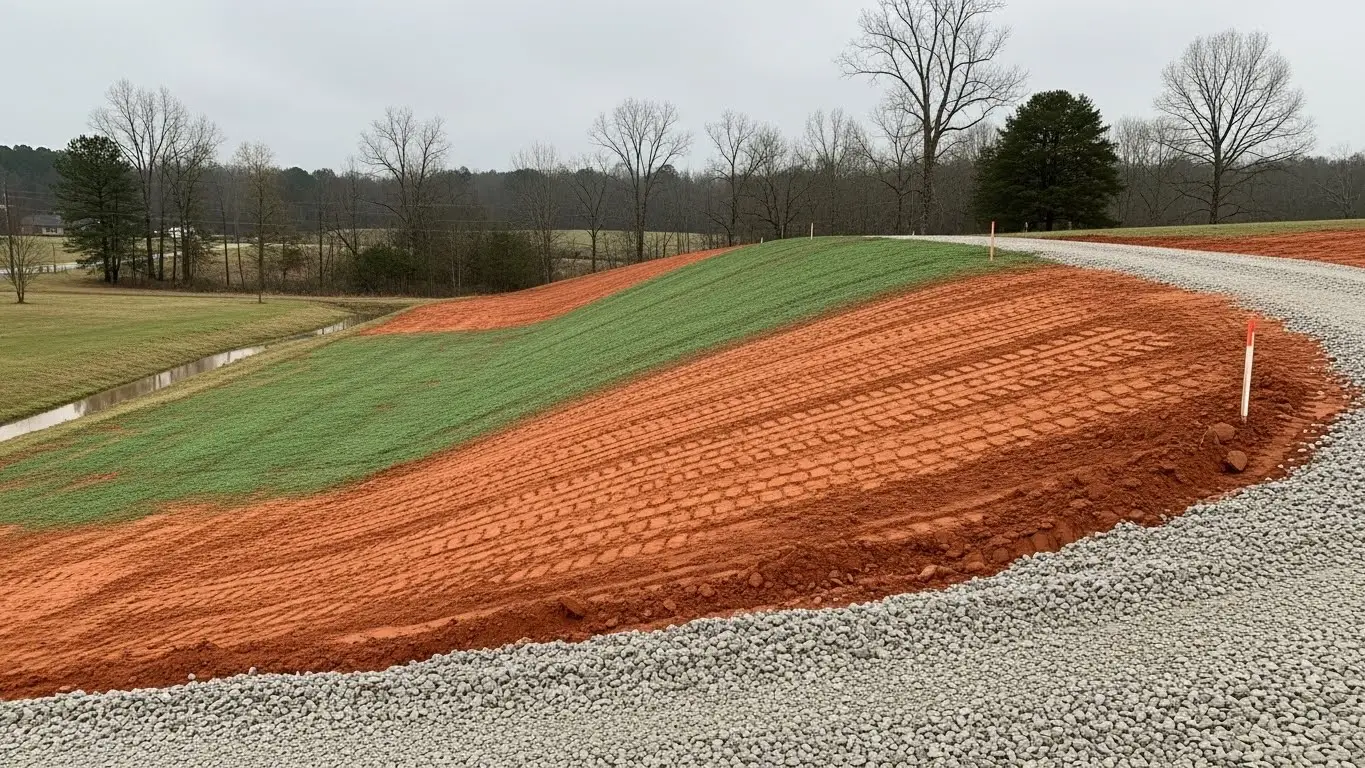
You’ve just invested in grading your land or installing a new gravel driveway. The surface looks smooth, the drainage is fixed, and the shape is perfect. But if you look at the banks and ditches, you see exposed red clay.
That bare soil is a ticking time bomb.
In Georgia, it only takes one heavy thunderstorm to turn that fresh dirt into mud. That mud flows into your ditches, clogs your culverts, and washes onto your brand new gravel road.
Important Note: This guide is not about creating a manicured golf course lawn. It is about stabilizing the soil to protect the structural integrity of your land after construction.
What Is Hydroseeding?
Hydroseeding is a process where a slurry mixture is sprayed onto the ground using high-pressure hoses. This mixture typically contains four key components:
Water: To hydrate the seed immediately.
Seed: The grass type chosen for the environment.
Mulch: A green wood or paper fiber that protects the seed from the sun.
Tackifier: A glue like bonding agent that sticks the mixture to the soil.
Unlike throwing dry seed by hand, hydroseeding creates a thick mat that locks onto the ground instantly.
Why Soil Fails After Grading
Most erosion problems start after the heavy equipment leaves.
When we grade a road or cut a new driveway, we have to disturb the earth to fix drainage issues. This leaves the soil loose and uncompacted on the sides. Because Georgia clay is dense, water moves over it quickly rather than soaking in.
If the slopes and ditches aren’t stabilized, the water gains speed, cutting deep ruts (channels) into the banks. This isn’t just ugly; it undermines the edge of your new driveway, causing it to collapse over time.
How Hydroseeding Prevents Erosion (The Science)
Hydroseeding is the industry standard for erosion control because it attacks the problem in three ways:
Immediate Bond: The tackifier (glue) holds the soil particles together even before the grass grows. It prevents rain from splashing the dirt away.
Moisture Retention: The mulch layer acts like a sponge, keeping the ground moist so the seeds can germinate faster in the Georgia heat.
Root Structure: Once the grass grows, the root system acts like a net, physically holding the bank together against gravity and water flow.
Types of Hydroseed Mixes
Not all green sprays are the same. Depending on your land, different mixes are required:
Erosion Control Blends: These are designed for quick germination to stop mud fast. They often contain temporary grasses (like Rye) that pop up in days to act as a bandage for the earth.
Slope Stabilization Mixes: These use deep-rooting grasses (like Bermuda or Fescue) that anchor deep into the clay to hold steep banks.
Ditch & Swale Mixes: These seeds can tolerate being wet occasionally without rotting.
Note: Always ask your hydroseeding contractor for a Department of Transportation (DOT) Grade mix for driveways, rather than a residential lawn mix.
Where Hydroseeding Makes Sense
We recommend hydroseeding specifically for the critical fail points of a rural property:
Steep Banks: Any cut created during driveway grading.
Ditches & Swales: To prevent the water channel from eroding deeper.
Retaining Wall Backfill: To lock in the fresh dirt behind a new wall.
Driveway Shoulders: To keep the edge of your gravel road firm.
Where Hydroseeding Does NOT Work
Honesty is key. Hydroseeding is not magic concrete.
It is NOT for driving on: Do not hydroseed the actual driveway path.
It is NOT for standing water: If you have a swampy area, you need Drainage Installation (like French Drains), not grass. Grass cannot grow underwater.
It is NOT a fix for bad grading: If the water flow is wrong, grass won’t stop it. You must fix the grading first.
Hydroseeding vs. Straw vs. Hand Seeding
| Feature | Hand Seeding & Straw | Hydroseeding |
| Wind Resistance | Low (Blows away) | High (Sticks to ground) |
| Rain Resistance | Poor (Washes into piles) | Excellent (Glue holds it) |
| Coverage | Patchy | Uniform / 100% Coverage |
| Cost | Low | Moderate |
| Best Use | Flat, small yards | Slopes, Ditches, Roads |
The Verdict: For flat areas, straw is fine. But for the slopes alongside a driveway, hydroseeding is the only reliable option.
Timing & The Importance of Tracking In
The most critical factor is Surface Preparation. You cannot spray seed on hard, baked clay and expect it to work.
The Tracking In Method:
At Dirt Road Repairs, when we finish a grading job, we often “track in” the slopes. This means running the bulldozer or skid steer up and down the slope to create horizontal grooves with the tracks.
These grooves catch water.
They catch the seed.
They prevent the mixture from sliding to the bottom of the hill.
When to Apply:
The best time to hydroseed is immediately after we finish the grading work, while the soil is still fresh and the track marks are new
Protect the Work You Paid For
Think of hydroseeding as the sealant for your dirt work. You have invested in proper grading and drainage to manage water don’t let surface erosion undo that hard work.
Need the Perfect Foundation?
Before you can seed, you need the land graded, the water managed, and the slopes prepped.
Contact Dirt Road Repairs today. We don’t plant the grass, but we build the solid foundation that ensures your land stays exactly where it belongs.
📞 Call us: 770-771-3977
📅 Schedule an Estimate: https://dirtroadrepairs.com/contact-us/