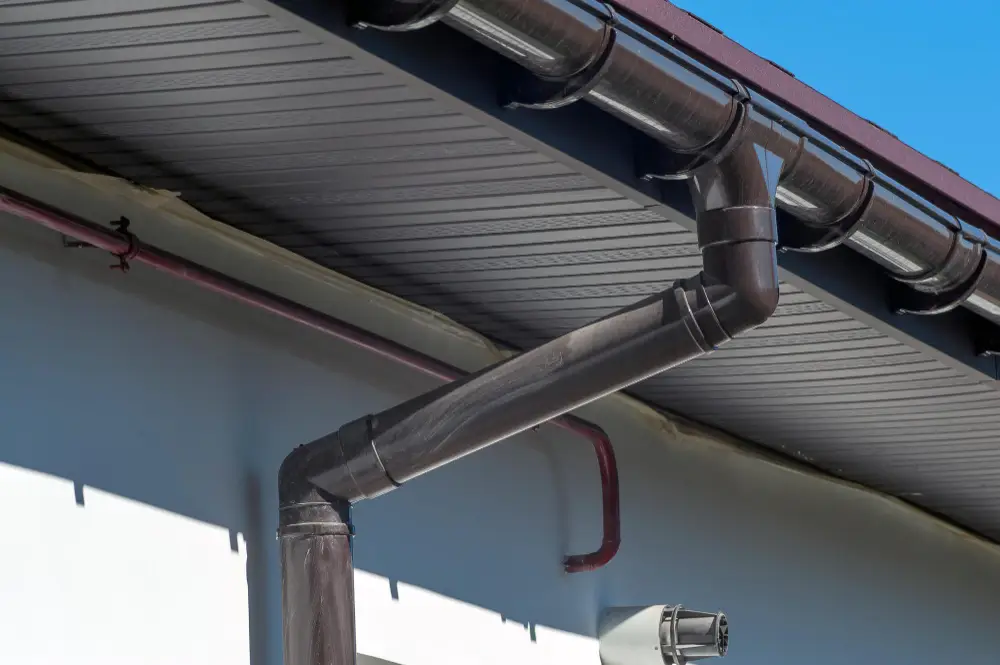
Agricultural buildings, commercial warehouses, shops, and industrial structures collect enormous amounts of rainwater from their large roof areas. Standard residential gutter systems lack the capacity and strength to handle these demands. Heavy-duty gutters designed for commercial applications provide the performance these buildings require.
Why Agricultural & Commercial Buildings Need Special Gutters
The scale and use patterns of these buildings create requirements beyond what residential systems can meet.
Roof Area & Water Volume
A 10,000-square-foot warehouse roof collects 6,000 gallons of water during a one-inch rainfall. A large agricultural building with 20,000 square feet of roof collects 12,000 gallons. This volume overwhelms residential five-inch and six-inch gutter systems.
Commercial gutters start at seven inches wide and range up to 12 inches or more. The increased capacity handles large water volumes without overflow.
Building Height
Many commercial and agricultural buildings exceed two stories in height. The increased elevation means water arrives at gutters with more velocity from the longer fall down the roof plane. This concentrated flow requires gutters with adequate depth to contain water without splashing over the edges.
Structural Loading
Commercial buildings often use steel or engineered wood framing with attachment points designed for specific loads. Gutter systems must mount securely to these structures without compromising the building envelope or exceeding connection capacities.
Heavy-duty hangers spaced appropriately distribute the weight of gutters, water, and accumulated debris across multiple attachment points. This prevents overloading any single connection.
Durability Requirements
Commercial and agricultural buildings may not receive the same maintenance attention as homes. The gutter system must function reliably with less frequent cleaning and inspection.
Materials and construction methods for commercial gutters provide durability that exceeds residential products. Thicker materials, welded or soldered joints instead of sealed seams, and corrosion-resistant coatings extend service life.
Commercial Gutter Materials
Several materials serve commercial and agricultural applications, each with specific properties.
Heavy Aluminum
Aluminum for commercial gutters starts at 0.032 inches thick and goes up to 0.040 inches or more. This thickness resists deformation from ladders, equipment contact, and debris accumulation.
Aluminum does not rust and handles temperature extremes well. The material costs less than copper or steel while providing long service life. Most commercial gutter installations use aluminum.
Galvanized Steel
Steel gutters provide maximum strength for applications where impact resistance matters. Agricultural buildings with overhead equipment, industrial sites with heavy machinery, and buildings in areas with severe weather may benefit from steel.
The galvanized coating protects against corrosion, but eventually wears away, especially at cut edges. Painting extends the service life. Steel weighs more than aluminum and requires stronger mounting.
Stainless Steel
Stainless steel costs significantly more than galvanized steel but resists corrosion without protective coatings. Applications involving chemicals, salt exposure, or conditions that accelerate corrosion justify the added expense.
Food processing facilities, agricultural buildings that house animals, and coastal commercial properties see long-term value from stainless steel gutters.
Copper
Copper for commercial applications functions the same as residential copper but in larger sizes. The material lasts 50 years or more and develops an attractive patina.
High-end commercial buildings where appearance matters use copper gutters. The cost limits applications to buildings where aesthetics justify the investment.
Sizing Commercial Gutters
Proper sizing ensures the system handles peak rainfall without overflow.
Calculating Flow Requirements
Start with the roof area that drains to each gutter section. Apply the pitch multiplier to account for the roof slope. Use the design rainfall intensity for your location, available from building codes or local authorities.
Manufacturer specifications show the capacity of different gutter sizes at various flow rates. Match the gutter size to your calculated requirements with a margin for debris accumulation.
For example, a 5,000-square-foot roof section at a location with six-inch-per-hour design rainfall might require an eight-inch gutter with multiple downspouts to handle peak flow.
Downspout Requirements
Commercial downspouts start at three-by-four inches and go up to six-by-six inches or larger. Larger downspouts drain gutters faster and reduce the backup that causes overflow.
Space downspouts closer together than in residential applications. A guideline of one downspout per 15 feet of gutter works for many commercial applications, but specific designs may vary.
Accounting for Ice & Snow
Buildings in snow regions must size gutters for the weight of snow and ice accumulation, not just water flow. Snow sliding off roofs can bury gutters under thousands of pounds of material.
Consider snow guards on the roof, heating cables in gutters, or both. These measures reduce ice loading and help gutters survive winter conditions.
Installation Considerations
Commercial gutter installation requires planning, equipment, and skills beyond typical residential work.
Access Equipment
Installing gutters on tall commercial buildings requires scaffolding, lifts, or other equipment beyond ladders. Budget for equipment rental or hire contractors with the necessary access tools.
Safety regulations for commercial work are stricter than for residential projects. Fall protection, worker training, and site safety measures add to project complexity and cost.
Structural Attachments
Mounting heavy gutters to metal buildings, concrete tilt-up panels, or structural steel requires specialized hardware. Attachments must transfer loads to structural members without damaging building materials.
Engineering may be required to verify that proposed attachment methods meet load requirements and building codes. This adds to project cost but ensures safe, code-compliant installation.
Gutter Forming
Commercial gutters are typically formed on-site using portable machines. The equipment produces gutters in the specified size and length without seams except at corners and direction changes.
This requires contractors with commercial forming equipment. Most residential gutter installers do not have machines capable of forming seven-inch and larger gutters.
Drainage Infrastructure
Downspouts from large commercial buildings produce high-volume discharge that can cause erosion and drainage problems at ground level. Underground storm drains, detention ponds, or connections to municipal systems may be necessary.
Plan the complete drainage path from roof to final discharge when designing the system. Building codes often regulate commercial site drainage and require engineered plans.
Agricultural Building Applications
Barns, equipment sheds, livestock buildings, and grain storage structures all benefit from heavy-duty gutters.
Protecting Animals & Equipment
Water running off barn roofs creates mud around entrances and in animal areas. Gutters that direct water away improve conditions for livestock and reduce the muddy messes that interfere with farm operations.
Equipment sheds without gutters allow water to collect around stored machinery, contributing to rust and deterioration. Protecting stored equipment adds value that offsets gutter installation costs.
Managing Large Volumes
Agricultural buildings often exceed 5,000 square feet, with many barns reaching 10,000 square feet or more. The water collected from these roofs must go somewhere, and uncontrolled discharge causes erosion, foundation problems, and impassable mud.
Combining gutters with proper drainage infrastructure manages these large volumes. Direct discharge to grassed waterways, detention areas, or farm ponds that can handle the flow.
Durability in Agricultural Environments
Farms involve dust, chemicals, and livestock waste that create harsh conditions for gutters. Choose materials that resist corrosion from these substances.
Aluminum holds up better than galvanized steel in these environments. Clean gutters annually to remove accumulated agricultural dust and debris before corrosion starts.
Maintenance for Commercial Systems
Commercial and agricultural gutters need maintenance schedules that account for the building use and local conditions.
Inspect gutters annually at minimum. Clean debris, check attachments, and address any damage. Buildings with trees overhead need more frequent cleaning.
Document maintenance in building records. Many commercial properties have maintenance management systems that track when work was completed and when it is due next.
Plan for eventual replacement. Even heavy-duty gutters have finite service lives. Budgeting for replacement before failure prevents damage to building contents and operations.
Dirt Road Repairs installs commercial and agricultural gutter systems for businesses and farms throughout our service area. We have the equipment and expertise to handle large buildings and the infrastructure to manage drainage from high-volume systems. Contact us to discuss gutter installation for your commercial or agricultural property.