Outbuildings collect rainwater just like homes, and without gutters, that water causes the same types of damage. Erosion around foundations, rotting siding, and water infiltration into storage areas all result from unmanaged roof runoff. Installing gutters on sheds, barns, workshops, and garages protects these structures and the items stored inside. The process follows the same principles as residential installation but accounts for differences in building construction and use.
Assessing Building Construction
Outbuildings vary widely in how they are constructed, and these differences affect gutter installation.
Buildings with Fascia Boards
Sheds and garages built with traditional wood framing typically have fascia boards along the roof edge. These boards provide a mounting surface for gutters identical to what residential installations use.
Check the fascia condition before installing gutters. Press firmly with a screwdriver to test for soft spots that indicate rot. Replace damaged sections before mounting gutters. Outbuildings often receive less maintenance than homes, so fascia deterioration is common.
Buildings Without Fascia
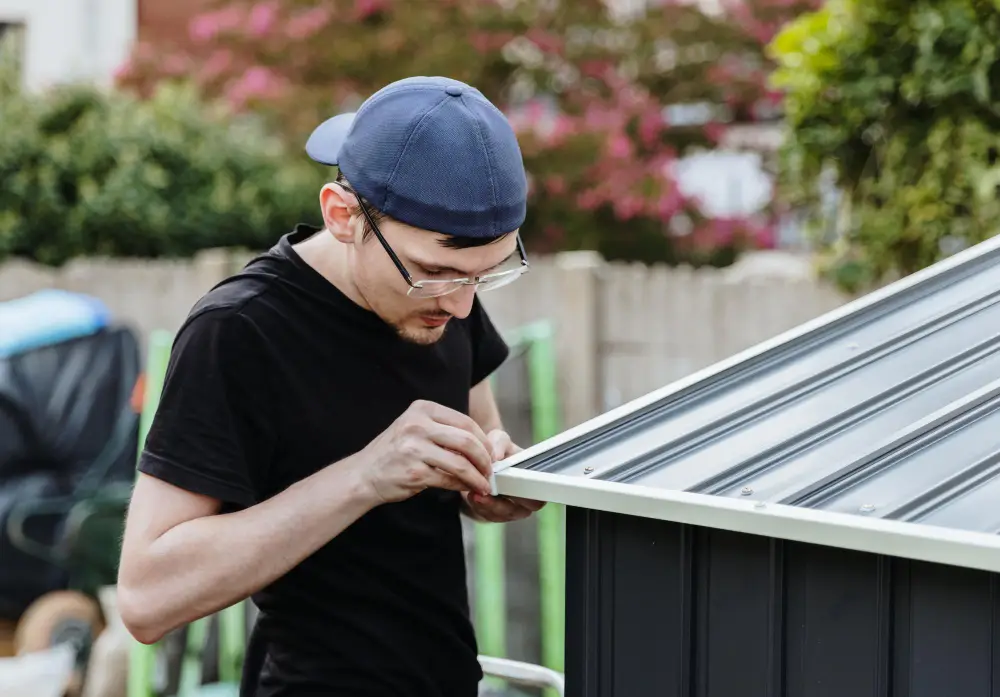
Some outbuildings lack fascia boards entirely. Metal buildings, pole barns, and simple shed construction may have exposed roof edges with no mounting surface.
For these buildings, you have two options. Install a fascia board first, then mount gutters to it. Use pressure-treated lumber for the fascia to resist moisture. Alternatively, use roof-mount brackets that attach directly to the roof deck or to the purlins beneath metal roofing.
Metal Buildings
Metal buildings present specific challenges. The roofing typically consists of panels with raised ribs. Screwing directly into metal roofing can compromise the waterproof seal and void roofing warranties.
Special brackets mount between roofing ribs or attach to the building structure beneath the panels. Some systems use straps that clamp over the ridge and extend down to support gutters at the eaves. Research the appropriate mounting method for your specific metal building before starting installation.
Pole Barns
Pole barns have posts that support the roof structure. The walls may be open or enclosed with metal panels. Mounting gutters requires attaching to the horizontal members at the roof edge, called girts or purlins.
Use long lag screws or through-bolts to secure hangers to these structural members. Standard gutter screws may not reach through metal panels into solid wood. Measure the panel thickness and any air gap to determine required fastener length.
Sizing Gutters for Outbuildings
Calculate gutter size based on the roof area that drains to each gutter section.
Determining Roof Area
Measure the length and width of roof sections. For pitched roofs, account for the slope by multiplying the footprint area by a factor based on pitch. Low-pitch roofs use 1.05, medium-pitch roofs use 1.12, and steep roofs use 1.3.
A 24-by-30-foot barn with a medium-pitch roof has a footprint of 720 square feet. Multiplied by 1.12, the actual roof area is approximately 806 square feet per side.
Selecting Gutter Size
Five-inch gutters handle most sheds and small outbuildings. For barns, large workshops, and buildings with steep roofs or locations with high rainfall intensity, six-inch gutters provide adequate capacity.
Very large agricultural buildings may need commercial-size gutters that are seven inches or wider. These are typically custom-formed rather than stock residential products.
Downspout Spacing
Follow the same guidelines as residential installations. Place one downspout for every 20 to 30 linear feet of gutter. For a 40-foot building, install downspouts at both ends or place one in the center and slope gutters from each end toward it.
Installation Process
The basic installation steps apply to outbuildings as they do to homes, with adjustments for the structure type.
Establishing Slope
Snap a chalk line from the high point to the downspout location with one-quarter inch of drop per 10 feet of gutter length. This guide ensures consistent slope along the entire run.
For buildings without fascia boards, establish the gutter position based on the roof edge. The gutter should sit slightly below the roofline to catch water as it runs off while avoiding interference with the roofing material.
Installing Hangers
Space hangers no more than 24 inches apart. For buildings in snow regions or for metal gutters, reduce spacing to 18 inches. Use fasteners long enough to reach solid wood in the building structure.
On metal buildings with thin panels, standard gutter screws will not hold. Use self-tapping screws designed for metal-to-metal connections or lag screws that reach the structural members behind the panels.
Assembling Gutter Sections
Cut sections to length and assemble them on the ground when possible. Connect sections with slip joints, apply sealant, and secure with rivets or screws. Attach end caps, corners, and drop outlets.
Long runs on barns and workshops benefit from assembly on the ground because handling 40 or 50 feet of assembled gutter at height requires multiple helpers. Lift the assembled section into the hangers as a unit.
Installing Downspouts
Position downspouts where discharge will not interfere with building use. Avoid areas near doorways, in high-traffic zones, or where water will discharge onto driveways and parking areas.
For barns and workshops with equipment access, place downspouts at corners where they are less likely to be struck by vehicles. Use protective covers or bollards if downspouts must be in areas with vehicle traffic.
Secure downspouts to the building wall with brackets every six feet. On metal buildings, match the fastener type to what works for the wall material.
Discharge & Drainage
Direct downspout discharge at least three feet away from the building foundation. For outbuildings used for storage or housing equipment, protecting the foundation from water infiltration is just as important as for homes.
Consider the ground conditions around the building. Workshops and barns often sit on gravel or bare soil that erodes easily. Splash blocks, downspout extensions, or gravel-filled trenches prevent erosion at discharge points.
Gutters for Sheds
Small storage sheds often lack the built-up roofs and fascia of larger buildings. Gutter installation requires adapting to simpler construction.
Shed Construction Types
Prefabricated sheds from home centers and retailers typically have no fascia. The roof overhangs the walls by a few inches, and the edges are finished with a drip edge or left bare.
For these sheds, install a fascia board first. Cut pressure-treated 1×4 or 1×6 to length and attach it to the roof rafters or the top plate of the walls. This fascia provides a mounting surface for standard gutter hangers.
Simplified Systems
Small sheds may not need full gutter systems. A single gutter along the front edge that directs water away from the door and frequently used areas may suffice.
For sheds under 100 square feet, even a four-inch gutter provides adequate capacity. Use what is available and affordable, as the water volume is small.
DIY Installation
Shed gutter projects are well-suited for DIY installation. The low height makes ladder work safer, and the small scale means fewer materials and less time. Use sectional gutters and basic hand tools to complete the project in a few hours.
Gutters for Workshops & Garages
Detached workshops and garages share construction methods with homes and accept standard residential gutter systems.
Access Considerations
Position downspouts where they will not be struck by vehicles entering and exiting the garage. Corner locations work well, as do positions at the back wall if the building has vehicle access from only one side.
For workshops with large rolling doors, keep gutters and downspouts clear of the door track and operation area. Check that downspouts will not interfere with doors in the open position.
Interior Moisture Control
Workshops and garages often lack the heating and ventilation of homes. Moisture infiltration through foundations causes more problems in these spaces because items stored inside are exposed to conditions closer to outdoors.
Gutters that keep water away from the foundation help control interior moisture. Combine gutters with proper grading and foundation drainage for best results.
Gutters for Barns
Barn gutter installation addresses the larger scale and agricultural use of these buildings.
Roof Runoff Volume
Barns have large roof areas that collect substantial water. A 40-by-60-foot barn roof collects 1,500 gallons during a one-inch rainfall. This volume requires adequate gutter capacity and multiple downspouts.
Six-inch gutters and three-by-four-inch downspouts handle barn roof areas effectively. For very large barns, commercial gutter systems may be necessary.
Livestock & Equipment Protection
Barns house livestock, equipment, and stored feed and supplies. Water running off the roof creates mud, damages stored goods, and contributes to unsanitary conditions for animals.
Gutters that direct water away from barn entrances and animal areas improve conditions inside and around the building. Combine gutter installation with drainage improvements like gravel beds and French drains to manage the large volumes of water involved.
Longevity in Agricultural Environments
Barns face exposure to agricultural chemicals, fertilizers, and manure. These materials can corrode gutter systems over time. Aluminum holds up better than galvanized steel in these environments.
Regular cleaning removes corrosive materials before they cause damage. Rinse gutters annually if the barn environment includes airborne dust from fertilizers or feed.
Maintenance Considerations
Outbuildings often receive less attention than homes, but their gutters need the same maintenance.
Clean gutters at least twice per year, more often if trees overhang the building. Check hangers for looseness and tighten or replace as needed. Inspect for leaks at joints and seal any that develop.
Clear downspouts of blockages promptly. A clogged downspout causes the same overflow problems on an outbuilding as on a home.
Dirt Road Repairs installs gutters on all types of outbuildings throughout our service area. We work with sheds, barns, workshops, garages, and agricultural buildings of every size. Contact us for an assessment and quote for gutter installation on your property.