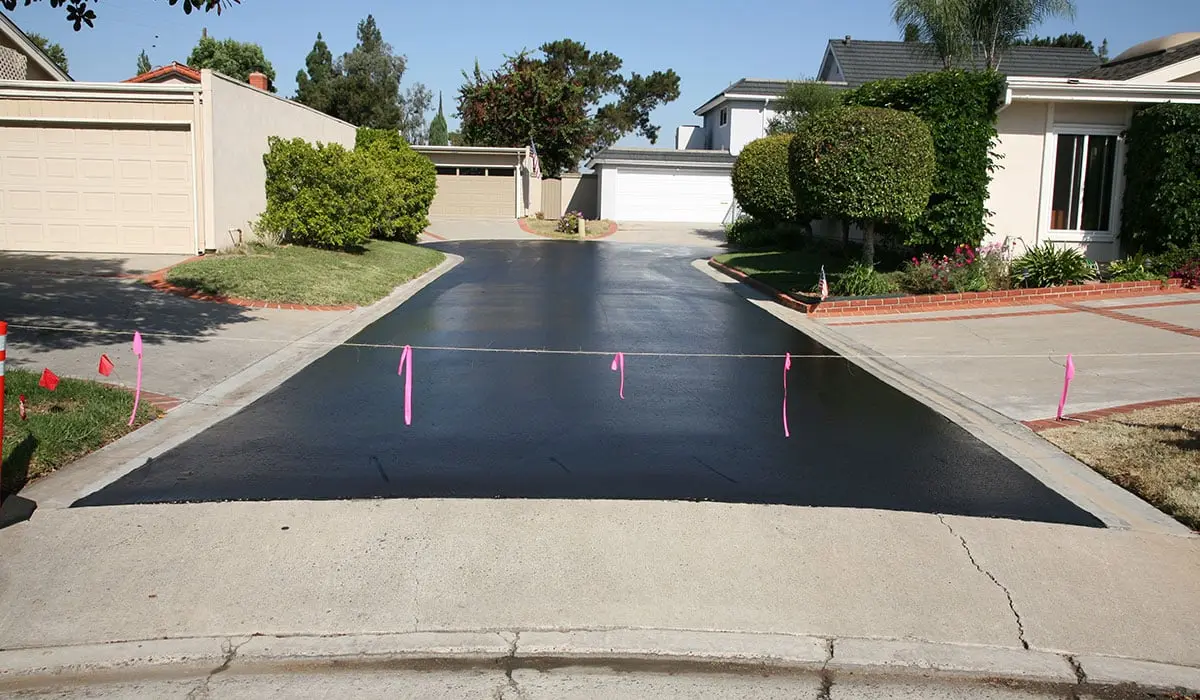
Erosion damage to driveways, walkways, and dirt roads costs property owners thousands of dollars in repairs each year. Much of this damage starts at the roofline, where rainwater collects and discharges onto the ground below. A single rainstorm can deposit hundreds of gallons of water from a roof onto surfaces that were never designed to handle concentrated flow. Knowing how gutters prevent this damage helps property owners protect their investments and avoid recurring repair expenses.
The Connection Between Roofs & Ground Surfaces
Every roof acts as a collection system for rainwater. A 1,000-square-foot roof collects approximately 600 gallons of water during a one-inch rainfall. Without gutters, this water falls directly off the roof edge and lands on whatever surface lies below.
When that surface is a driveway, walkway, or dirt road, the concentrated water flow causes damage that worsens with each storm. Asphalt develops cracks and potholes. Concrete becomes undermined and settles unevenly. Gravel washes away and leaves ruts. Dirt roads develop gullies that grow deeper over time.
Gutters intercept this water at the roofline and channel it to controlled discharge points away from vulnerable surfaces. Instead of hundreds of gallons falling along the entire roof edge, the water exits through downspouts that can be directed to areas designed to handle the flow.
Erosion Damage to Asphalt & Concrete Driveways
Paved driveways suffer from water damage in ways that may not be immediately obvious. The damage happens gradually, often beneath the surface where it cannot be seen until problems become serious.
Undermining & Settlement
Water that falls repeatedly in the same location washes away the base material beneath paved surfaces. Asphalt and concrete driveways sit on layers of compacted gravel and soil. When water erodes this base, the pavement above loses support.
The result is settlement, cracking, and eventual failure. Sections of the driveway sink, creating low spots that collect more water and accelerate the damage. Cracks form at the edges of settled areas and allow water to penetrate further beneath the surface.
Gutters with properly directed downspouts keep water away from driveway edges where undermining is most likely to occur. Extending downspout discharge several feet beyond the driveway prevents the concentrated flow that causes base erosion.
Surface Deterioration
Even when the base remains stable, repeated water exposure damages the surface of paved driveways. Asphalt contains oils that can be stripped away by constant water contact. The aggregate loosens and the surface becomes rough and pitted.
Concrete absorbs water and can develop surface scaling, especially in areas with freeze-thaw cycles. Water that enters the concrete expands when it freezes, breaking apart the surface layer by layer.
Keeping water off the driveway surface reduces these effects. Gutters collect the majority of roof runoff and allow property owners to control where that water goes.
Gravel Driveway Erosion
Gravel driveways are particularly vulnerable to erosion because the material is not bound together. Individual stones can be displaced by water flow, and once displacement starts, it accelerates rapidly.
Washout Patterns
Water flowing across a gravel driveway picks up stones and carries them downhill. This creates channels that deepen with each storm. The channels concentrate water flow, which increases erosion speed and makes the channels deeper still.
A single downspout discharging onto a gravel driveway can create a washout gully within a few heavy rainstorms. The gully fills with fine sediment while the gravel migrates downslope, requiring regular regrading to keep the driveway usable.
Loss of Material
Gravel that washes off a driveway must be replaced. Over time, the cost of replacement gravel adds up to a significant expense. Property owners without gutters may find themselves adding new gravel every year or two, while those with properly managed drainage systems go many years between applications.
Gutters reduce the volume of water hitting the driveway surface by collecting roof runoff. Directing downspout discharge to vegetated areas or drainage systems keeps concentrated flow away from the gravel entirely.
Dirt Road Damage
Dirt roads and unpaved access lanes suffer the most severe erosion from uncontrolled roof runoff. The soil surface has no protection against water flow, and even small amounts of concentrated discharge can cause significant damage.
Gully Formation
When water from a downspout or roof edge hits a dirt road, it immediately begins cutting into the surface. The initial channel may be only an inch or two deep, but each subsequent storm deepens and widens it. Within a single season, a minor depression can become a gully deep enough to damage vehicles.
Gullies on dirt roads create safety hazards and make the road difficult or impossible to use during wet conditions. Repairing gully damage requires bringing in fill material, regrading the surface, and often adding drainage improvements to prevent recurrence.
Rutting & Soft Spots
Even without visible gully formation, repeated wetting creates soft spots in dirt roads. The soil becomes saturated and loses its ability to support vehicle weight. Tires sink in and create ruts that hold water and stay soft long after surrounding areas have dried.
These soft spots often appear where roof runoff hits the road surface, even if the water does not form visible channels. The repeated concentration of water in one area keeps the soil saturated while adjacent areas drain normally.
Walkway & Pathway Protection
Walkways made from pavers, flagstone, concrete, or gravel all benefit from gutter protection. The same erosion forces that damage driveways affect walkways, often with even more noticeable results because of their narrower width.
Paver Displacement
Paver walkways depend on a stable sand and gravel base. Water washing across the surface can carry away joint sand and undermine individual pavers. Once one paver settles or shifts, adjacent pavers follow. The walkway becomes uneven and creates a tripping hazard.
Edge Erosion
Walkways often have edges bordered by landscaping or lawn. Water flowing off a roof lands on these edges and washes away the soil that holds the edge materials in place. Border stones shift, edging bends, and soil erosion creates gaps between the walkway and surrounding surfaces.
Gutters keep the bulk of roof water away from walkway edges. Downspouts positioned to discharge away from pathways prevent the concentrated flow that causes edge damage.
Designing Gutter Systems for Surface Protection
Protecting driveways, walkways, and dirt roads requires more than just installing gutters. The entire system must be designed to move water away from vulnerable surfaces.
Downspout Placement
Position downspouts so they discharge away from paved and unpaved surfaces. This may require longer gutter runs to reach suitable discharge locations. The extra material and labor cost less than repairing erosion damage.
Discharge Extensions
Standard downspout elbows discharge water just inches from the foundation. Extensions carry water several feet further, but even extended discharge may land on or near driveways and walkways. Underground drainage pipes can route water to locations well away from any surfaces that could be damaged.
Grade Considerations
The ground surrounding buildings should slope away from the foundation at a minimum of one inch per foot for the first six feet. This grade helps surface water drain away rather than pooling near structures. It also helps water from downspouts flow toward appropriate drainage areas rather than back toward driveways and walkways.
The Cost of Ignoring Gutter Drainage
Property owners who do not address gutter drainage often face recurring expenses that exceed the cost of proper drainage solutions.
Regrading a washed-out dirt road costs several hundred to several thousand dollars depending on the extent of damage. This expense may repeat annually without drainage improvements.
Replacing washed-away gravel adds up quickly. A cubic yard of gravel costs $30 to $50 delivered, and a badly eroded driveway may need multiple yards per application.
Asphalt and concrete repairs range from hundreds of dollars for crack filling to thousands for section replacement. Settlement caused by undermining may require removing and replacing entire driveway sections.
Installing gutters and proper drainage costs a fraction of these recurring repairs and solves the problem permanently.
Dirt Road Repairs specializes in drainage solutions that protect driveways, walkways, and unpaved roads from erosion damage. Our team assesses your property and designs gutter and drainage systems that keep water where it belongs. Contact us to discuss how we can protect your surfaces from erosion.